
English 
T: +86-13760465505
E: vibetop@163.com
E: vibetop@163.com
No.13, Cheng Guang Industrial park, Dafu Community, GuanLan Street, Longhua District, Shenzhen, GuangDong, China

Views: 0 Author: Site Editor Publish Time: 2026-08-27 Origin: Site


Manufacturing bathroom fixtures carries incredibly high stakes. You must perfectly balance aesthetic demands, strict corrosion resistance, and unforgiving unit economics. Engineering leaders often face a difficult primary dilemma. Should they commit to the massive upfront tooling costs of casting? Or should they accept the higher per-part costs but greater agility of CNC machining? The wrong choice severely damages product margins and delays launch schedules. This guide provides an objective, data-backed framework to help you choose between bathroom hardware casting vs cnc machining. We base this comparison heavily on volume requirements, material selections, and go-to-market timelines. You will learn how to evaluate break-even points accurately. You will discover when to leverage hybrid manufacturing strategies. Ultimately, you will gain the insight needed to build scalable, highly profitable product lines. By understanding the strengths of each process, you avoid costly manufacturing missteps.
Volume dictates the baseline: CNC machining wins for low-volume runs and prototyping; casting becomes economically viable only after crossing specific production thresholds (typically 1,000+ units).
Geometry limits: Casting is superior for complex, hollow, or organic shapes (e.g., curved faucet spouts), while CNC excels at tight tolerances and cylindrical/geometric profiles.
Surface finish realities: Both methods require post-processing for bathroom environments, but cast parts often require more aggressive finishing to remove parting lines and surface porosity before plating.
Hybrid strategies: Many manufacturers utilize a hybrid approach—casting the primary body and CNC machining critical mating surfaces (like threads for brass plumbing connectors).
Choosing a manufacturing process directly dictates your product lifecycle profitability. It goes far beyond simply shaping metal. Your chosen method impacts upfront capital, per-unit pricing, and overall time-to-market. A wrong decision early in the design phase creates cascading financial problems. You might launch a product requiring intense manual labor to fix surface defects. Or you might invest heavily in molds for a product line lacking market demand.
We define a successful manufacturing choice using specific criteria. First, the process must deliver consistent quality across thousands of units. Second, you need a minimal scrap rate. High material waste destroys profit margins quickly. Third, the process must align perfectly with your target profit margins. Finally, the finished parts must meet strict compliance standards for water safety. Plumbing fixtures require precise sealing to prevent devastating leaks in residential and commercial buildings.
Scalability remains the most critical factor. Manufacturers face serious risks if they get locked into an inflexible process. Imagine launching a highly successful fixture design. Demand suddenly spikes by five hundred percent. If you rely solely on CNC machining, cycle times bottleneck your entire supply chain. Conversely, you might spend tens of thousands of dollars on complex die-casting molds. If the product fails to sell, you cannot recoup those amortized tooling costs. Balancing these extremes requires careful strategic planning.
Failing to account for post-processing labor costs during initial quotes.
Ignoring the impact of tool wear on tight tolerance requirements.
Overestimating initial sales volume and purchasing expensive molds too early.
Casting involves pouring molten metal into a specific mold cavity. In the sanitary ware industry, we primarily rely on two methods. Die casting forces molten metal under high pressure into reusable steel molds. It works exceptionally well for high-volume zinc or aluminum parts. Investment casting uses wax patterns to create ceramic molds. Manufacturers often use investment casting for high-end stainless steel fixtures. Both methods offer distinct advantages for large production runs.
Casting provides a drastic reduction in per-part costs at high volumes. Once you pay for the initial mold, the actual production becomes incredibly cheap and fast. You can produce hundreds of parts in a single shift.
Material efficiency stands out as a massive benefit. Casting represents a near net-shape production method. You only use the metal required for the final part. This eliminates significant material waste. This efficiency becomes absolutely crucial when pouring expensive copper bathroom fittings. Reusing sprues and runners further minimizes your material expenses.
Furthermore, casting offers unmatched design freedom. Modern plumbing fixtures feature ergonomic, organic curves. They require complex, hollow internal waterways for proper fluid dynamics. Machining these internal cavities proves nearly impossible. Casting handles intricate, organic geometries effortlessly.
Despite the benefits, casting introduces severe upfront capital expenditure risks. Tooling and mold costs often run into tens of thousands of dollars. You must run strict return-on-investment calculations before cutting steel.
Lead times also present a major hurdle. Tooling creation delays your time-to-market significantly. Expect to wait several weeks or even months before receiving your first off-tool samples. You cannot pivot easily if market trends change during this waiting period.
Finally, casting carries inherent defect risks. Molten metal can trap air during the cooling process. This creates internal porosity and shrinkage cavities. If you fail to implement proper Design for Manufacturability (DFM) rules, these defects lead to catastrophic water leaks. Porosity also ruins surface finishes, causing chrome plating to blister or peel over time.
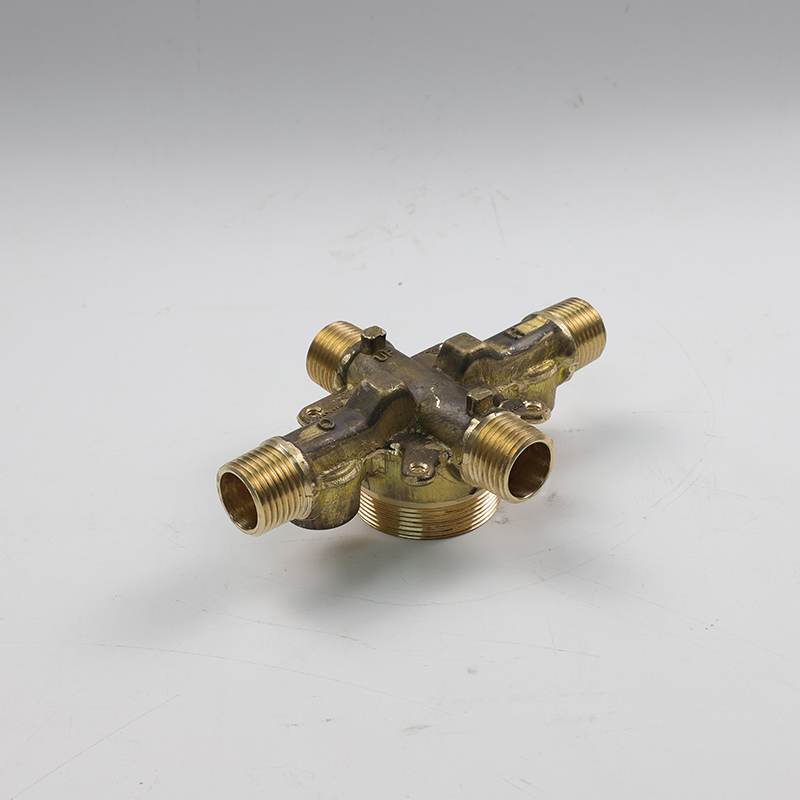
CNC machining represents a subtractive manufacturing approach. Instead of pouring liquid metal, machines carve parts from solid billets. We typically machine blocks of brass, stainless steel, or aluminum. High-speed spinning cutting tools remove material until the final shape remains. This highly controlled process offers unique advantages for specific market segments.
The most compelling benefit is the complete absence of tooling costs. You experience an immediate transition from CAD file to physical production. This makes the process ideal for producing custom bathroom hardware. It also serves low-volume premium collections perfectly. You avoid massive upfront investments.
Agility and iteration speed remain incredibly high. If a client requests a design modification, you simply update the G-code. You can tweak designs mid-production without scrapping expensive physical molds. This flexibility allows brands to test the market with short production runs.
Additionally, CNC machines deliver unparalleled precision. You achieve exceptionally tight tolerances. This precision proves mandatory for critical functional components. Valve housings, cartridges, and cnc bathroom accessories require exact dimensions. Water-tight sealing is entirely non-negotiable. Even microscopic deviations cause leaks.
The primary drawback of CNC machining is the high unit cost. Machining requires longer cycle times per part. Machine hourly rates run high. This reality makes large-scale production economically unviable for most standard consumer-grade fixtures.
Material waste also drives up costs rapidly. Subtractive processes generate significant scrap metal. You might cut away sixty percent of a solid block to achieve your final shape. While you can recycle chips, you lose the premium price paid for the raw billet. This hurts profits, especially when cutting expensive brass and stainless alloys.
Lastly, geometry constraints limit design creativity. Machining tools require clear line-of-sight access. Deep, complex hollow internal cavities present massive difficulties. Creating internal right-angle fluid channels requires complex multi-axis machining or multi-part assemblies. Both workarounds increase production costs significantly.
Choosing between these methods requires a structured evaluation. You must analyze specific engineering and economic variables. Below, we break down the most critical criteria for making an informed manufacturing decision.
Every engineering team must plot where cost curves intersect. You map tooling amortization directly against piece-part price. For the first five hundred units, CNC machining always looks cheaper. You have zero tooling costs. However, as volume scales past one thousand units, the math shifts dramatically. The high per-part cost of CNC outpaces the amortized mold costs of casting. Finding this exact intersection point helps you decide when to switch manufacturing methods. Never lock yourself into a high-cost method for a high-volume product.
Materials behave very differently in both processes. Machining lead-free brass offers excellent structural integrity and easy cutting. However, casting lead-free brass presents distinct challenges due to altered flow characteristics. Zinc alloys cast beautifully but require robust plating for corrosion resistance. Stainless steel machines slowly and wears out cutting tools quickly. However, investment casting stainless steel yields incredibly durable components. You must evaluate how your chosen material withstands wet, corrosive bathroom environments over decades of use.
Post-processing workflows vary wildly. CNC provides a superior as-machined surface. You only need light polishing before applying PVD or chrome plating. Castings require much more labor. You must carefully perform fettling to remove sprue marks and parting lines. Aggressive polishing removes surface porosity. If you plate over a porous cast surface, the chemicals become trapped. This inevitably leads to plating defects like blistering, peeling, and oxidation spots.
Functional interfaces demand precision. You must machine O-ring grooves and valve threads accurately to prevent leaks. Even when utilizing die casting, the standard tolerances rarely meet strict plumbing codes for sealing. Cutting internal threading on brass plumbing connectors often necessitates secondary CNC operations. You cannot rely on casting alone for moving mechanisms.
Evaluation Criteria | Casting | CNC Machining |
|---|---|---|
Ideal Production Volume | High (1,000+ units) | Low to Medium (1 - 1,000 units) |
Upfront Tooling Cost | High (Requires custom molds) | Zero (Relies on CAD/CAM programming) |
Per-Unit Cost at Scale | Very Low | High (Dictated by cycle times) |
Geometric Complexity | Excellent (Hollow interiors, organic curves) | Limited (Struggles with deep hollow cavities) |
Surface Porosity Risk | Moderate to High (Requires strict DFM) | Zero (Machined from solid billets) |
Your manufacturing partner dictates your ultimate success. Evaluating a vendor's real-world expertise requires deep diligence. You should ask specific questions during the auditing process. Do they offer comprehensive in-house DFM reviews? Do they machine their own tooling, or do they outsource mold creation? In-house tooling guarantees faster iteration if the mold needs adjustments.
Rarely does a manufacturer rely entirely on one method for complex plumbing fixtures. The most pragmatic solution usually involves a hybrid approach. We recommend casting the main body of the faucet or showerhead. This captures the cost benefits and accommodates organic aesthetic designs. Afterward, you route the cast part to a CNC milling center. The machine precisely cuts the functional interfaces. It taps the threads, finishes the valve seats, and cuts precise O-ring grooves. This hybrid strategy combines the economic scalability of casting with the undeniable precision of machining.
Transitioning from concept to production requires a methodical approach. We recommend following these structured steps to minimize financial risk:
Order CNC Prototypes First: Never buy a mold before verifying form and function. Machine a small batch of prototypes to validate the design with stakeholders.
Request a Manufacturability Review: Submit your 3D models to your chosen vendor. Ask them to identify potential porosity risks and thick wall sections unsuitable for casting.
Analyze Quality Control Data: Request historical data from the vendor regarding their porosity testing methods. Ensure they utilize X-ray inspection or destructive testing for cast components.
Map the Lifecycle Cost: Calculate exactly at what unit volume a casting mold pays for itself compared to pure machining.
Neither manufacturing method reigns universally superior for sanitary ware. The optimal choice strictly depends on your product lifecycle stage, volume projections, and geometric complexity. CNC offers the speed and precision needed for custom hardware and early market testing. Casting delivers the scale and material efficiency required for mass-market profitability.
We strongly advise starting new product launches using subtractive machining. This validates market demand without massive capital risks. Once sales volume reaches your break-even threshold, transition the mature product line to die or investment casting. This phased strategy protects your budget while ensuring product availability.
Do not leave your manufacturing strategy to guesswork. Take action today by submitting your CAD files to a qualified manufacturing partner. Request a transparent Design for Manufacturability review and a comprehensive production cost analysis to secure your product's success.
A: Yes, but the material forms differ. You machine from solid extruded billets, while casting uses raw ingots melted into liquid. Lead-free brass behaves differently in both. Machining lead-free brass is straightforward, but casting it requires specialized gating systems to ensure proper flow and prevent structural weakness.
A: CNC parts feature minor tool marks requiring light, automated polishing before plating. Cast parts demand rigorous manual or robotic fettling. You must aggressively sand cast parts to remove parting lines and expose dense metal. Failing to polish out casting porosity leads directly to chrome blistering and peeling.
A: The break-even point typically falls between 500 and 2,000 units. However, geometric complexity severely alters this threshold. A highly intricate part might make CNC too expensive even at 300 units, pushing you toward casting earlier to preserve your target profit margins.
A: Yes, but it requires significant engineering adjustments. You cannot simply use the exact same CAD file. You must add draft angles to allow mold ejection. You also need to standardize wall thicknesses and core out heavy sections to prevent sink marks and cooling defects.


