
English 
T: +86-13760465505
E: vibetop@163.com
E: vibetop@163.com
No.13, Cheng Guang Industrial park, Dafu Community, GuanLan Street, Longhua District, Shenzhen, GuangDong, China

Views: 0 Author: Site Editor Publish Time: 2026-07-23 Origin: Site


Automotive engineers face unprecedented pressure today. They must deliver flawless vehicle performance under extreme dynamic loads. Modern internal combustion engine (ICE) platforms demand tightening dimensional tolerances. Electric vehicle (EV) architectures require even stricter manufacturing precision. A minor dimensional deviation can compromise entire vehicle assemblies. Component failure is simply not an option. Therefore, CNC turning serves as a critical supply chain lever. It represents much more than a standard manufacturing method. Plant managers use it constantly to mitigate defect rates. They leverage high-speed turning to accelerate time-to-market. This precision machining process ensures absolute repeatability for symmetrical components.
We will guide you through an actionable evaluation framework below. You will learn exactly where to integrate turned components within your systems. You will discover how to identify the correct materials and suppliers. This strategic approach guarantees maximum operational reliability across your entire automotive production line.
CNC turning provides unparalleled repeatability for cylindrical car auto parts, minimizing variance in high-stress automotive environments.
Material selection (especially the shift toward aluminum auto parts) directly impacts component lifecycle, weight reduction, and production scalability.
Evaluating a manufacturing partner requires looking beyond unit cost to process capability (Cpk) and IATF 16949 compliance.
Automated CNC turning significantly reduces lead times and supply chain risks for custom CNC car parts.
Automotive OEMs and Tier 1 suppliers face constant operational pressure. Procurement teams must balance rigid dimensional tolerances against aggressive cost-down targets. They must achieve this balance at a massive global scale. Legacy casting or basic extrusion methods often introduce unacceptable variance. Subsequent secondary machining becomes mandatory anyway. CNC turning solves these complex supply chain challenges directly. It delivers high-speed repeatability for symmetrical and cylindrical parts.
Modern turning centers combine complex milling and turning operations. Advanced Swiss-style machining reduces secondary operations entirely. These machines utilize live tooling and sub-spindles. A single bar of raw material enters the machine. A fully finished component drops into the parts catcher moments later. You bypass intermediate transfer stages completely. This setup minimizes human handling errors. Cycle times plummet rapidly.
Engineers rely on this process for highly consistent output. You can forecast exact production timelines using digital twin simulation software. Programmers optimize tool paths digitally before cutting actual metal. They prevent costly machine crashes. They maximize raw material yield. Such predictability empowers automotive supply chains globally. Scrap rates drop significantly across the board. Your engineering teams transition much faster from initial prototype runs to high-volume manufacturing. Investing strategically in Automotive Precision Components ensures long-term operational profitability.
Vehicle safety depends upon flawless microscopic interactions. Several core automotive systems rely exclusively on CNC-turned components.
Valves, custom fittings, and spool bodies operate under extreme internal pressures. Surface finish (Ra) requirements remain incredibly strict for these items. A rough metal surface degrades sealing mechanisms rapidly. High-pressure brake fluid can bypass a damaged O-ring. Extrusion gaps cause catastrophic leaks. Precision CNC turning ensures microscopic smoothness. It guarantees leak-proof hydraulic assemblies over decades of use.
Gear blanks, splined shafts, and planetary gear components demand absolute physical perfection. Concentricity and runout tolerances remain completely non-negotiable. Any rotational deviation causes immense Noise, Vibration, and Harshness (NVH). NVH failures ruin the driving experience instantly. They accelerate premature mechanical wear inside the transmission. Precision turning eliminates these high-speed vibrations at the source. It balances heavy rotating masses perfectly.
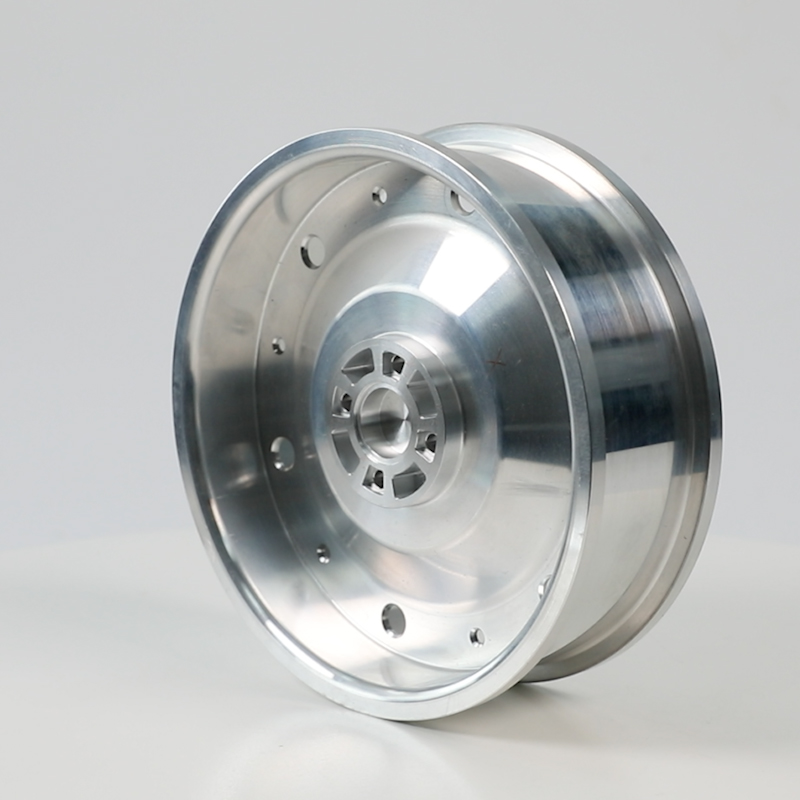
Wheel bearings, heavy-duty spacers, and the CNC Turning Wheel Hub anchor the vehicle to the road. These specific parts face brutal dynamic load environments constantly. Deep potholes and aggressive cornering forces distribute massive impact loads. We evaluate these components heavily based on fatigue resistance. Engineers specify exact corner radii during the turning process. Careful machining prevents dangerous stress concentrations. It prevents catastrophic wheel assembly failures entirely.
Classic car restoration experts often need obsolete replacement parts. High-performance racing teams demand bespoke structural upgrades. We validate unique use cases for these specialized applications daily. Flexible turning centers produce low-volume batches efficiently. They manufacture robust Custom CNC Car parts matching or exceeding original OEM specifications.
Material choices dictate the entire component lifecycle. Metals directly influence vehicle weight reduction goals and production scalability limits. Let us examine the core automotive materials used in modern turning centers.
Electric vehicle battery enclosures rely heavily on lightweight aluminum alloys. Suspension components and motor heat sinks require high thermal conductivity. Aluminum Auto Parts offer an excellent strength-to-weight ratio. General machinability remains outstanding. However, notable manufacturing trade-offs exist. Softer aluminum grades risk severe galling during cutting. Hot material sticks directly to the cutting tool edge. You must utilize specific polished carbide inserts. High-pressure coolant prevents chip welding.
Transmission drive shafts demand extreme durability. High-wear internal engine components require massive tensile strength. Alloy steels provide this necessary structural toughness. Yet, they introduce distinct manufacturing challenges on the shop floor. Tougher steels cause much higher tooling wear rates. Cycle times increase significantly per part. Machinists must monitor insert degradation constantly. They replace cutting tools proactively before dangerous tolerance drift occurs.
Electrical connectors require maximum conductivity. EV charging infrastructure depends heavily on copper interface pins. Sensor housings often utilize brass bodies. These non-ferrous metals resist environmental corrosion naturally. Machining brass is incredibly fast and efficient. Copper, conversely, produces long stringy chips. It demands specialized chip-breaking tool geometries. Raw material cost volatility also complicates long-term financial budgeting.
Material Type | Primary Automotive Application | Key Advantage | Manufacturing Challenge |
|---|---|---|---|
Aluminum (6061/7075) | EV enclosures, heat sinks, wheel hubs | High strength-to-weight ratio | Tool galling, requires polished inserts |
Alloy Steel (4140/4340) | Transmission shafts, gear blanks | Superior tensile strength | Rapid tool wear, longer cycle times |
Brass & Copper | Sensor housings, EV charging pins | Maximum electrical conductivity | Stringy chips, high raw material costs |
Automotive supply chains tolerate zero defects. Authoritative frameworks govern every production step strictly. IATF 16949 certification acts as an absolute necessity. It enforces rigorous material traceability. It standardizes quality management protocols globally. Buyers must verify this specific certification immediately during procurement. It separates top-tier vendors from unreliable job shops.
You must also evaluate supplier Production Part Approval Process (PPAP) maturity. The PPAP methodology guarantees ongoing batch consistency. We look closely at the Process Capability Index (Cpk). Cpk values must consistently exceed 1.33 across production runs. This rule applies especially to safety-critical automotive parts. A 1.33 Cpk means the manufacturing variation fits comfortably inside your tolerance limits. It proves the turning process remains statistically stable over time.
Physical inspection ultimately proves dimensional integrity. Modern turning centers utilize advanced in-process probing. Touch probes check critical dimensions before the part leaves the chuck. Automated Coordinate Measuring Machines (CMM) map complex surfaces down to single microns offline. Non-destructive testing (NDT) identifies hidden internal flaws. Ultrasonic testing catches dangerous material voids beneath the surface. We rely on these metrology tools daily. They prevent defective components from reaching the final assembly line.
High-volume automotive runs introduce specific implementation dangers. Tool wear causes gradual tolerance drift across large batches. A slightly worn cutting insert produces slightly oversized diameters. Operators must catch this drift immediately. Supply chain bottlenecks pose another major risk entirely. A lack of raw material traceability halts assembly lines instantly. You must track every single material batch back to the original foundry.
Manual loading limits factory throughput significantly. Operator fatigue introduces unwanted inconsistency. We evaluate potential vendors based heavily on their automation maturity. Robotic arms load heavy steel blanks tirelessly. Automated hydrodynamic bar feeders supply continuous raw stock. Advanced CNC turning centers run unattended overnight. This heavy automation drives down per-unit costs dramatically. It completely eliminates operator inconsistency.
You need a highly structured approach during procurement. Ask these critical questions during vendor selection:
Do they have in-house heat treatment or surface finishing? Internal finishing capabilities reduce total lead times. They mitigate multi-vendor transit risks.
Can they demonstrate robust PPAP capability? Request their historical control plans. Review their Failure Mode and Effects Analysis (FMEA) documents carefully.
Do they offer Design for Manufacturability (DFM) feedback during the quoting phase? Early engineering collaboration saves money. Good vendors suggest minor design tweaks to speed up turning cycles.
Never award a massive contract immediately. Request a small trial run first. Evaluate their First Article Inspection (FAI) reports thoroughly. Audit the supplier’s defect resolution process. How do they handle a rejected batch? Their response speed defines their ultimate reliability.
CNC turning serves as the absolute foundation of automotive reliability. It bridges the critical gap between precise engineering requirements and commercial scalability. Modern vehicles simply cannot function without perfectly machined cylindrical components.
Sourcing success hinges entirely on strategic alignment. You must match component complexity against the optimal material choice. You must partner exclusively alongside a compliant, highly automated manufacturing partner. Do not settle for outdated production methods.
Submit your CAD files to a certified vendor for an immediate DFM review.
Consult your engineering team regarding optimal material selection to reduce vehicle weight.
Audit your current suppliers for strict IATF 16949 compliance and Cpk stability.
Transition legacy cast components to automated mill-turn processes for better yield predictability.
A: Standard tolerances for typical Car Auto Parts range from ±0.001 to ±0.005 inches. However, advanced CNC turning centers can hold much tighter tolerances. High-performance automotive applications often require ±0.0005 inches or better. Final precision depends entirely upon machine rigidity, material properties, and shop thermal stability.
A: Electric vehicles eliminate traditional engine and transmission components. Instead, EVs demand precision thermal management fittings. They require complex sensor housings and lightweight structural connectors. The industry is shifting heavily toward aluminum and copper parts. Turning centers must adapt to machining high-conductivity materials safely.
A: CNC turning rotates the workpiece rapidly against a stationary cutting tool. This process is ideal for cylindrical parts like drive shafts, pins, and wheel hubs. Conversely, CNC milling moves a spinning cutting tool against a stationary workpiece. Modern automotive manufacturing often utilizes advanced mill-turn centers. These hybrid machines perform both operations simultaneously.


