
English 
T: +86-13760465505
E: vibetop@163.com
E: vibetop@163.com
No.13, Cheng Guang Industrial park, Dafu Community, GuanLan Street, Longhua District, Shenzhen, GuangDong, China

Views: 0 Author: Site Editor Publish Time: 2026-07-08 Origin: Site


Material selection in modern automotive manufacturing goes far beyond simple aesthetic preference. You are calculating a complex balance of weight, structural durability, and raw material costs. This forms a critical engineering and procurement strategy for any vehicle platform. Modern automotive design requires strict mass reduction to meet global efficiency standards. Electric vehicle manufacturing especially demands optimized thermal load management to protect sensitive battery cells. These engineering factors directly impact overall vehicle performance and strict regulatory compliance.
Heavy automotive components severely reduce electric battery range. They also hinder acceleration, braking distances, and cornering agility. You simply cannot achieve modern aerodynamic and efficiency goals using outdated material paradigms. Choosing between lightweight aluminum alloys and rugged stainless steel requires deeper mechanical analysis. We must evaluate long-term lifecycle performance alongside daily manufacturing viability. Specific application environments play a massive role in this final decision. Automotive engineers meticulously analyze environmental exposures before committing to a specific metal.
Aluminum excels in reducing unsprung weight and improving thermal dissipation, making it ideal for engine components and wheel assemblies.
Stainless Steel delivers unmatched tensile strength, extreme heat tolerance, and impact resistance, standardizing its use in exhaust systems and high-stress structural joints.
Implementation Risk: Mixing the two metals without proper isolation leads to galvanic corrosion, a common point of failure in aftermarket modifications.
Procurement ROI: Total cost of ownership for Precision Auto Parts depends heavily on tooling wear and machining times, where aluminum generally offers lower production costs.
We face constant mechanical trade-offs in automotive engineering. Buyers and designers must balance fuel efficiency against severe crashworthiness. Extended driving range demands significantly lighter vehicles. However, long-term durability requires immense structural resilience. Heavy metals provide undeniable safety but ruin fuel economy over time. Lighter metals improve speed but may fail under extreme physical stress. You must define success criteria very early in the design phase.
A successful component must hit exact performance metrics consistently. You should measure mechanical success across several distinct engineering pillars. These metrics guide every procurement and design choice.
Meeting strict strength-to-weight ratios for chassis integrity.
Surviving specific environmental exposures like winter road salt.
Enduring extreme engine heat without warping or melting.
Maintaining tight manufacturing tolerances over decades of use.
If a part warps under heat, it fails completely. If it corrodes rapidly, passenger safety is severely compromised. Tight manufacturing tolerances are critical for reliable vehicle assembly. Components must fit together seamlessly on the fast-moving production line. A tiny dimensional deviation causes cascading mechanical failures during operation. Your material choice ultimately defines the overall success of the vehicle. We must evaluate every option objectively.
Aluminum offers exceptional weight reduction capabilities for modern vehicles. You typically see 30% to 40% mass savings over standard steel alloys. This directly improves vehicle handling and overall fuel efficiency. Lighter vehicles require much less energy to accelerate from a stop. They also brake faster and corner with improved stability. Engineers prioritize these lightweight metals heavily for modern electric vehicle platforms. Shedding chassis weight offsets the heavy mass of lithium-ion battery packs.
Thermal dynamics represent another core advantage of this metal. Aluminum boasts superior thermal conductivity compared to most industrial metals. This makes it absolutely vital for automotive radiators, intercoolers, and engine blocks. It pulls damaging heat away from critical areas incredibly efficiently. Better heat dissipation prevents catastrophic engine and battery thermal runaways. We utilize extruded aluminum heavily in EV battery enclosures for this exact cooling reason.
A prime example of this critical application is the AL6061 Wheel Hub. It provides the necessary shear strength while drastically cutting unsprung weight. Lower unsprung weight improves suspension response significantly over rough terrain. The vehicle feels much more agile and planted on the road. Properly engineered Aluminum Car Auto Parts perform flawlessly in these high-demand environments. They deliver the perfect balance of agility and strength.
However, engineering limitations certainly exist. Aluminum lacks a true fatigue limit. It will eventually crack under continuous cyclical stress. You must engineer its intended lifespan very carefully. Over-engineering material thickness helps mitigate this inherent risk. You cannot blindly swap a steel component for an aluminum one. The part geometry must change to accommodate the material's distinct fatigue properties.
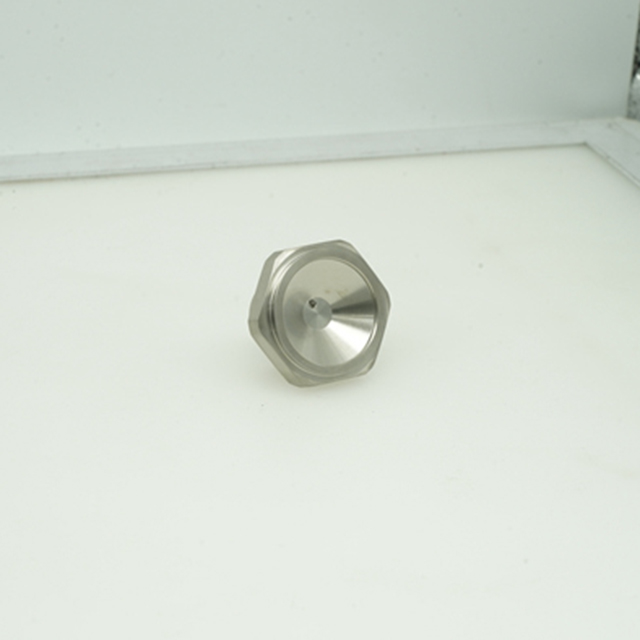
Stainless steel excels in extreme high-stress durability applications. It delivers vastly superior tensile and yield strength profiles. This makes it the default engineering choice for chassis fasteners, engine brackets, and structural reinforcements. When you need unyielding physical support, stainless steel delivers perfectly. It handles immense blunt loads without bending or deforming.
Thermal tolerance is another major deciding factor for vehicle designers. Stainless steel remains structurally sound at temperatures exceeding 800 degrees Celsius. You cannot negotiate on base materials for engine exhaust manifolds. Catalytic converter housings also demand this level of extreme heat resistance. Aluminum would melt or warp rapidly under these severe combustion conditions. Stainless steel endures thousands of rapid heating and cooling cycles without suffering structural degradation.
The internal corrosion resistance mechanisms are fascinating. A passive chromium oxide layer naturally forms on the metal surface. It completely protects the underlying iron from environmental degradation. Winter road salts and ambient moisture cannot easily penetrate this invisible shield. This self-healing layer ensures long-term reliability in harsh, wet climates. Even if you scratch the surface, the chromium reacts with oxygen to repair the protective barrier.
Despite these benefits, clear application limitations remain. You face a very significant heavy weight penalty. Vehicles become noticeably heavier, negatively impacting daily fuel economy and acceleration. Higher tooling and machining costs also arise during manufacturing. The extreme hardness of the metal wears down cutting tools rapidly. Production cycles slow down considerably compared to softer metals. You must weigh these exact factors carefully before specifying high-volume Stainless Steel Car Auto Parts.
Comparing these metals requires a highly structured technical approach. The strength-to-weight ratio heavily favors aluminum alloys. Aluminum possesses a very high specific strength. This means it remains remarkably strong relative to its low mass. Stainless steel possesses high absolute strength instead. It is much heavier but can easily withstand massive blunt force impacts. We use stainless steel for rigid protection and aluminum for agile performance.
Machinability directly impacts your overall production scalability. Aluminum allows for much faster feed rates during CNC milling operations. You experience far less tool wear and spindle strain. This results in significantly lower costs for high-volume CNC routing. Stainless steel requires a different machining approach entirely. It demands much slower machining speeds and specialized coolant strategies. It carries a high work-hardening risk. The metal hardens aggressively as you cut it. This requires rigid tooling and powerful machinery.
Lifecycle and long-term maintenance profiles differ drastically. We must compare oxidative degradation in aluminum against crevice corrosion in stainless steel. Aluminum suffers from surface pitting over time when exposed to harsh chemicals. Stainless steel resists broad surface corrosion beautifully. However, it struggles in tight, oxygen-deprived spaces where the protective chromium layer cannot regenerate. We have summarized the core comparison points below for quick reference.
Evaluation Metric | Aluminum Alloys | Stainless Steel Alloys |
|---|---|---|
Weight Profile | Very light (Excellent for EV battery range) | Heavy (Increases overall vehicle mass) |
Thermal Conductivity | High (Ideal for heat sinks and radiators) | Low (Retains heat efficiently in exhaust systems) |
Machinability | Excellent (Fast cutting, extremely low tool wear) | Challenging (Work-hardens quickly, requires rigid tools) |
Corrosion Type | Oxidative surface pitting | Crevice corrosion in tight mechanical joints |
Tensile Strength | Moderate (Requires thicker geometry for heavy loads) | Exceptional (Handles extreme structural stress) |
Engineers face severe reliability risks when mixing these two metals. The mixed-metal hazard is a notorious failure point in automotive design. Galvanic corrosion occurs aggressively when bolting stainless steel directly to aluminum. This chemical reaction accelerates when an electrolyte like saltwater or dirty rainwater is present. You often see this specific failure in poor aftermarket modifications.
The chemistry of galvanic corrosion is straightforward but destructive. The aluminum acts as a sacrificial anode. The stainless steel acts as a cathode. The aluminum rapidly corrodes, weakens, and completely dissolves. You frequently see this when mechanics thread bare stainless bolts into an aluminum engine block. The delicate aluminum threads simply disintegrate over time. The bolt eventually pulls out under tension.
You must deploy strict physical mitigation strategies. We recommend several practical assembly solutions to prevent this chemical disaster.
Apply specialized anti-seize compounds meticulously during final assembly.
Use high-quality dielectric grease to block moisture from entering the joint.
Install durable nylon washers to physically separate the dissimilar metals.
Substitute with zinc-plated hardware where extreme tensile strength is not critical.
Galling represents another major mechanical implementation risk. Engineers also know this phenomenon as cold welding. Stainless steel fasteners frequently seize during initial installation. High friction strips the microscopic protective oxide layer away. The bare internal metals literally fuse together permanently. You must specify exact thread tolerances to prevent it. Proper lubrication is absolutely mandatory when assembling these specific components.
Procurement teams need a clear, actionable shortlisting logic. First, you must deeply assess the operational environment of the part. A highly reliable rule of thumb exists. If the component manages cooling fluids, handles ambient heat, or needs to be extremely light, evaluate aluminum first. If it handles heavy structural load, extreme exhaust heat, or severe abrasive wear, default to stainless steel. Understanding the operating environment removes early guesswork.
Next, you must closely evaluate the total landed cost. Raw material price volatility affects your manufacturing budget constantly. Machining time heavily influences the final per-part price. Severe tooling wear adds massive hidden expenses to long production runs. Post-processing steps also differ significantly. Aluminum usually requires chemical anodizing for surface protection. Stainless steel requires acid passivation to fully restore its oxide layer. These mandatory steps add both time and money.
You need to secure reliable Car Auto Parts from proven, capable suppliers. We strongly recommend auditing your current supply chain. Verify their specific heavy-duty CNC capabilities before placing large orders. You should always request detailed material test reports before committing to a high-volume run. Confirming exact alloy compositions prevents catastrophic field failures down the line. Working with specialized vendors ensuring reliable Precision Auto Parts delivery will safeguard your vehicle assembly timelines.
There is no universally superior metal in automotive engineering. Superiority is strictly application-dependent. Aluminum offers unmatched lightweight handling performance and engine cooling efficiency. Stainless steel provides unbeatable structural impact strength and extreme thermal resilience. You must match the material directly to the specific physical burden it will carry.
Long-term reliability relies entirely on accurate environmental modeling. You must perfectly understand where the part lives inside the vehicle architecture. Proper factory assembly techniques are just as vital. Mixing dissimilar metals carelessly guarantees premature mechanical failure. You cannot cut corners during the assembly phase.
We highly encourage you to consult with a metallurgy or CNC machining expert. Have them deeply review your specific component blueprints and tolerance stacks. They can easily validate your material callouts. Making the right structural choice early saves millions in future warranty claims.
A: Yes, but it requires strict mitigation. You must use anti-seize paste or isolation washers to prevent galvanic corrosion. Without physical or chemical isolation, the aluminum acts as an anode and rapidly corrodes when exposed to moisture.
A: In absolute tensile strength, yes. However, by volume, aluminum parts can be engineered to be just as strong. Engineers increase the thickness of the aluminum geometry. The resulting part handles the same stress while still weighing significantly less than a comparable steel part.
A: Aluminum is typically cheaper to purchase and faster to machine. This lowers your labor and tooling costs. Stainless steel costs more upfront and requires more machining time. However, stainless steel often offers a longer lifecycle in high-stress automotive applications.
A: Aluminum does not rust because it contains no iron. It will not create red iron oxide. However, it does oxidize. It forms a powdery white layer on the surface. This oxidation layer actually protects the underlying metal from further environmental corrosion.


