
English 
T: +86-13760465505
E: vibetop@163.com
E: vibetop@163.com
No.13, Cheng Guang Industrial park, Dafu Community, GuanLan Street, Longhua District, Shenzhen, GuangDong, China

Views: 0 Author: Site Editor Publish Time: 2026-06-29 Origin: Site


In semiconductor manufacturing, the integrity of vacuum and fluid pipelines directly dictates wafer yield and process stability. A single microscopic flaw in a gas line can ruin hundreds of sensitive wafers. We cannot afford even slight deviations in these highly controlled environments.
Substandard components introduce micro-contamination, outgassing, or unexpected leak rates. These hidden issues quickly disrupt delicate ALD, CVD, and etch processes. Impurities entering the process chamber cause immediate defect density spikes. They ultimately force unexpected and highly disruptive fab downtime.
Evaluating and procuring high-grade stainless steel components requires moving beyond basic material data sheets. You must verify ultra-high purity (UHP) processing. You must ensure precise CNC tolerances. You also need strict cleanroom handling protocols. We will detail exact specifications, metallurgical requirements, and vendor evaluation criteria. This ensures you secure a highly reliable and clean component supply chain.
Not all 316L stainless steel is viable for semiconductor use; UHP applications require VIM/VAR (Vacuum Induction Melting/Vacuum Arc Remelting) processes to eliminate non-metallic inclusions.
Vacuum systems and fluid/gas distribution pipelines demand distinct surface finish requirements (Ra values) and sealing mechanisms (e.g., metal face seals vs. KF/CF flanges).
Custom stainless steel CNC parts are critical for specialized gas manifolds and exhaust routing where standard off-the-shelf fittings introduce dead legs or integration constraints.
Vendor evaluation must prioritize full material traceability, SEMI standard compliance, and verifiable Class 100 (ISO 5) cleanroom packaging protocols.
The performance of gas and vacuum pipelines heavily influences overall fab success. You define success in this industry by maintaining continuous, high-yield wafer production. Component selection is never just a simple procurement task. It functions as a critical risk-mitigation strategy. Securing the right metallurgical grades protects your process chambers from catastrophic contamination events.
Compromising on component quality leads to immediate production hazards. Substandard fittings cause several severe operational disruptions:
Outgassing: Low-grade steel releases trapped gases under vacuum conditions. This alters process chamber pressures and ruins delicate deposition layers.
Particulate Shedding: Poorly machined surfaces flake off microscopic metal particles. These particles land directly on wafers, destroying nanoscale circuit architectures.
Trace Moisture Retention: Rough interior finishes trap microscopic water molecules. Moisture reacts violently with specialty gases, creating highly corrosive byproducts.
Lifecycle considerations demand long-term thinking during component selection. Cheaper, non-compliant fittings face rapid degradation. Aggressive process gases like chlorine trifluoride (ClF3) and hydrogen fluoride (HF) attack weak internal grain structures. This chemical corrosion necessitates premature replacement of entire line sections. Frequent maintenance windows completely disrupt facility output and delay production schedules.
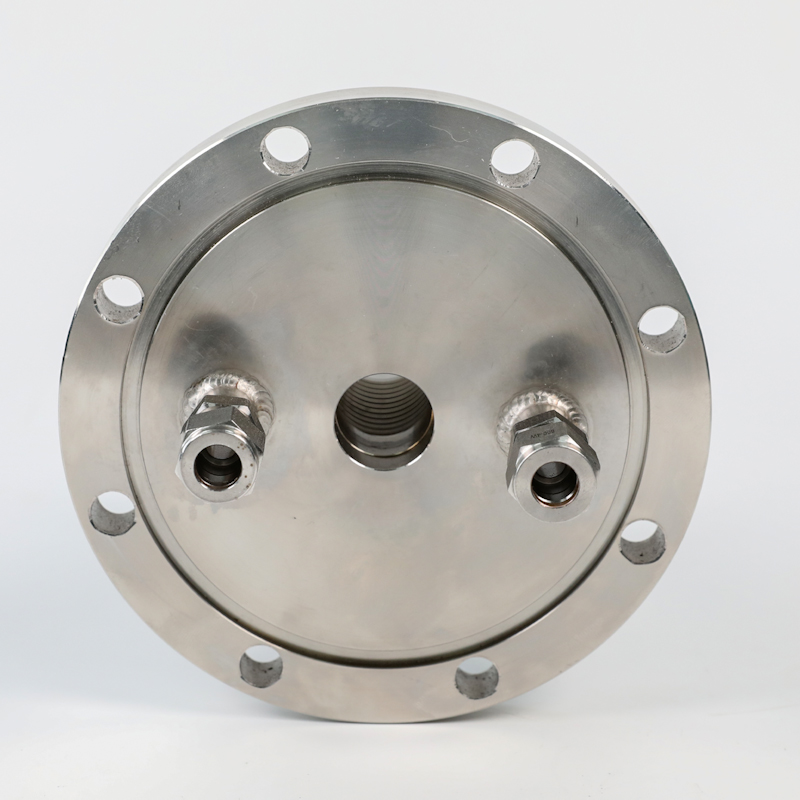
Semiconductor facilities rely on two primary pipeline categories. Each system handles distinct pressures, chemicals, and physical states. Understanding these differences ensures you select the correct material grades and sealing mechanisms.
These ultra-high purity systems deliver highly corrosive, toxic, or reactive precursor gases. You rely on these lines to transport chemicals precisely to the process chamber. The application demands absolute perfection in fluid dynamics and material resistance.
Common component types in this category include micro-fittings, precision diaphragm valves, mass flow controller (MFC) bases, and VCR-compatible metal face seals. These parts operate under positive pressure. They actively manage the flow of harsh chemicals.
The top priorities here are zero dead volume and absolute leak tightness. You must prevent gas entrapment at all costs. Entrapped gases cause dangerous cross-contamination during recipe changes. Electropolished interior surfaces are mandatory. They eliminate microscopic crevices where reactive molecules might hide.
Exhaust systems perform an equally critical but vastly different function. They remove byproduct gases from the process chamber. They also maintain highly stable operating pressures during deposition or etching cycles. Vacuum integrity directly impacts the stability of the plasma inside the chamber.
Component types for these systems include ISO, KF, and CF flanges. You will also use centering rings, vacuum pump transition pieces, and flexible stainless steel bellows. These components manage massive volume transfers under extreme negative pressure.
Structural integrity under negative pressure remains the primary priority. Parts cannot deform or leak when subjected to intense vacuum forces. Minimal outgassing rates ensure the pumps operate efficiently. Thermal tolerance is also crucial. Heated exhaust lines prevent hazardous byproduct condensation, which would otherwise clog the piping network.
Here is a quick reference table comparing the requirements of these two distinct systems:
System Parameter | UHP Fluid & Gas Distribution | High-Vacuum Exhaust Systems |
|---|---|---|
Primary Function | Deliver pure precursor gases | Remove process byproducts |
Operating Environment | Positive pressure, highly corrosive | Extreme negative pressure, heated lines |
Common Sealing Mechanism | Metal face seals (VCR) | Elastomer O-rings (KF/ISO) or Copper gaskets (CF) |
Surface Finish Priority | Electropolished (Ra < 0.15 µm) | Mechanically polished or bright annealed |
Procuring reliable Stainless Steel Semiconductor Spare Parts requires strict adherence to specialized evaluation dimensions. You cannot rely on basic industrial hardware specifications. The semiconductor industry enforces rigorous metallurgical and geometric standards.
Metallurgical Purity: Standard industrial 316L stainless steel is insufficient for critical fab applications. It contains sulfur and non-metallic inclusions. You must specify 316L VIM/VAR (Vacuum Induction Melting/Vacuum Arc Remelting) or 316L ESR (Electro-Slag Remelting). These secondary melting processes align the grain structure and purify the alloy. This extreme purity prevents localized corrosion when exposed to reactive halogens.
Internal Surface Finish (Ra Specifications): Surface roughness correlates directly to your contamination risk. We measure this finish in Ra (Roughness Average). UHP fluid lines mandate a surface roughness of Ra < 0.15 µm. Achieving this requires rigorous electropolishing. Electropolishing dissolves microscopic peaks and enriches the surface with a passive chromium oxide layer. Mechanical polishing alone leaves micro-scratches that harbor deadly contaminants.
Compliance & Certification: Industry standards are strictly non-negotiable. SEMI F20 dictates the exact material specifications for 316L in semiconductor applications. SEMI F19 outlines the specific chemical and visual requirements for electropolishing. Verify these certifications before approving any component drawing.
Welding and Machining Standards: Pipeline installations require automated orbital welding. Components must feature extended tube stubs to accommodate orbital weld heads. You must also evaluate how machining impacts the heat-affected zone (HAZ). Minimizing the HAZ maintains the alloy's innate corrosion resistance.
Common Mistake: Relying on standard ASTM specifications for cleanroom piping. ASTM covers general industrial requirements. It does not address the stringent inclusion limits or chromium-to-iron surface ratios demanded by SEMI F20.
Facility upgrades and new tool installations rarely follow simple geometric paths. Off-the-shelf catalog parts often fail to meet spatial or integration demands. You encounter severe limitations when modifying legacy equipment. Designing proprietary gas boxes also demands geometries that standard catalogs simply do not offer. Standard fittings often introduce unwanted dead legs. They create awkward integration constraints that complicate maintenance.
High-tolerance custom components solve these complex routing challenges safely. Precision manufacturing enables engineers to consolidate multiple connections into singular, seamless units. This drastically reduces the total number of potential leak points in your gas delivery system.
Integrating stainless steel CNC parts plays a massive role in system optimization. They allow you to create specialized multi-port manifolds from solid billets. You can design custom chamber adapters to mate new pumps to older process tools. Specialized pump exhaust spools bypass existing facility obstacles. CNC precision ensures that every custom flange mates perfectly with standard ISO or CF hardware.
Design for Manufacturability (DFM) guarantees successful implementation. You must partner closely with machinists who intimately understand semiconductor geometries. DFM principles in this sector are highly specific:
Avoid Sharp Internal Corners: Sharp corners create flow turbulence. They trap particulate matter during gas delivery. Always specify generous internal radii.
Eliminate Blind Holes: Blind tapped holes act as virtual leaks in vacuum environments. They trap air pockets that slowly seep into the system over time. Every internal cavity must be fully vented.
Prevent Trapped Volumes: Poor internal geometries hinder pump-down times. Smooth, continuous transitions guarantee optimal fluid and gas dynamics.
Below is a summary chart comparing standard catalog components against custom machined alternatives:
Feature Matrix | Standard Catalog Fittings | Custom CNC Components |
|---|---|---|
Lead Time | Immediate to short | Requires engineering and machining time |
Integration Flexibility | Rigid; limited to standard angles | Unlimited geometric configurations |
Leak Point Reduction | Requires multiple welds/seals | Consolidates routing into single monolithic blocks |
Space Optimization | Often bulky in tight gas boxes | Engineered specifically for confined footprints |
Sourcing high-purity components requires rigorous supplier evaluation. Even the most perfectly machined part becomes useless if it arrives contaminated. You must scrutinize a vendor's operational protocols just as closely as their machining capabilities.
Cleanroom processing verification stands as your first filtering criteria. A component is only as clean as its final packaging environment. Shortlist criteria must explicitly require verifiable ultrasonic cleaning procedures. Vendors must use ultra-pure deionized (DI) water heated to precise temperatures. Following the drying phase with high-purity nitrogen, the vendor must perform dual-bagging procedures. They must conduct this final packaging exclusively inside certified Class 100 or ISO 5 cleanrooms. Any exposure to ambient factory air instantly negates prior electropolishing investments.
Require extensive traceability and documentation. Demand 100% material test reports (MTRs) for every single delivery. You need heat lot traceability for every batch. This documentation guarantees the metal aligns with the original mill certificate. It prevents counterfeit or low-grade steel from infiltrating your UHP pipelines. If a contamination issue arises, heat lot traceability allows you to quarantine affected batches immediately.
Assess overall supply chain resilience. Manufacturers must demonstrate the capacity to buffer inventory for your critical wear parts. Fab expansions often trigger massive, sudden surges in component demand. Unplanned maintenance events require immediate spare part availability. Resilient vendors maintain raw material stocks and flexible machining capacity. This prevents supply chain bottlenecks and keeps your fab running without interruption.
Best Practice: Conduct a virtual or physical audit of the supplier's cleanroom facility. Verify their DI water resistivity levels (ideal target is 18 Megohm-cm) and inspect their cleanroom air filtration logs before awarding major contracts.
Procuring reliable fluid and vacuum pipeline components demands a precise balance. You must weigh advanced metallurgical science alongside strict geometric tolerances. Overlooking surface finishes, cleanroom packaging, or basic material purity introduces severe operational risks. Process chamber integrity relies entirely on the invisible cleanliness of the tubes delivering its chemistry.
We strongly recommend defaulting to UHP-certified, VIM/VAR materials for all reactive gas delivery lines. While vacuum exhaust lines operate under different stresses, they still demand high-integrity seals and structurally sound alloys. Furthermore, utilize precision-machined custom components whenever standard fittings threaten to introduce dead legs or complex integration challenges.
Take proactive steps to secure your systems today. Request a comprehensive technical audit of your current pipeline bill of materials. Identify any components lacking proper SEMI certifications. Alternatively, submit your complex CAD files and specifications to a qualified machining partner for a custom capability assessment. Upgrading your pipeline integrity ensures stable yields and uninterrupted fab operations.
A: Standard 316L contains microscopic non-metallic inclusions. VIM/VAR (Vacuum Induction Melting/Vacuum Arc Remelting) utilizes secondary melting processes to eliminate sulfur and impurities. This results in higher metallurgical purity, superior electropolishing results, and excellent corrosion resistance against reactive semiconductor gases.
A: Not always. UHP gas lines require strict electropolishing (Ra < 0.15 µm) to prevent gas entrapment and particle shedding. Foreline vacuum parts often tolerate standard mechanical polishing or bright annealing. This depends on the specific baseline pressure requirements and the chemical properties of the bypass gases.
A: The industry standard mandates rigorous cleaning protocols. Components are processed with ultrasonic ultra-pure DI water and dried with high-purity nitrogen. Finally, they are double-bagged inside a certified Class 100 (ISO 5) cleanroom. This prevents transit contamination and ensures immediate cleanroom readiness.
A: Yes. Qualified suppliers routinely reverse-engineer or machine custom components to precise OEM tolerances. This service provides a highly reliable supply chain alternative for obsolete parts. It also circumvents high-lead-time issues commonly associated with proprietary vacuum and fluid handling equipment.


