
English 
T: +86-13760465505
E: vibetop@163.com
E: vibetop@163.com
No.13, Cheng Guang Industrial park, Dafu Community, GuanLan Street, Longhua District, Shenzhen, GuangDong, China

Views: 0 Author: Site Editor Publish Time: 2025-10-29 Origin: Site


In the past, manufacturing was often a slow and labor-intensive process. Producing a single part required hours of manual labor, repeated adjustments, and skilled craftsmanship that left room for inconsistencies. Today, however, modern industries operate on an entirely different level. With the rise of CNC processing hardware—Computer Numerical Control systems—the ability to combine precision, speed, and scalability has reshaped global production. CNC technology allows manufacturers to deliver highly accurate components in large quantities, meeting the increasing demands of industries such as aviation, semiconductors, and renewable energy.
This fusion of precision and scalability has made CNC processing hardware an indispensable part of modern manufacturing. It provides the foundation for building complex machinery, reliable spare parts, and advanced equipment used in critical industries.
At its core, CNC processing hardware refers to machines controlled by computer software that guides tools to cut, mill, drill, or grind materials with extraordinary accuracy. Unlike manual machining, CNC hardware interprets digital instructions and translates them into precise movements of cutting heads, ensuring that every part is produced exactly to design specifications.
This ability is not just about accuracy but also about consistency. Whether a manufacturer needs a single prototype or thousands of identical parts, CNC hardware ensures the results remain uniform. For industries that demand safety, durability, and reliability, such as aviation or energy, this level of precision is non-negotiable.
Manufacturing is not just about making accurate parts—it is about producing them at the scale industries require. CNC processing hardware provides both. The machines can run continuously, working around the clock without fatigue, and can switch between different part designs with relative ease by simply updating the software instructions.
This combination of speed and adaptability allows companies to remain competitive in a fast-changing market. For instance, when an aviation company requires a new spare part, or when semiconductor manufacturers need specialized copper components, CNC hardware can produce these items quickly without compromising on tolerances. The ability to handle both small-batch prototypes and mass production makes CNC hardware a cornerstone of modern industry.
The aviation industry is one of the most demanding sectors when it comes to precision. Every component used in an aircraft, from engine parts to landing gear fittings, must meet strict standards to ensure safety and performance. Even the smallest deviation can lead to serious consequences.
CNC processing hardware plays a critical role in producing spare parts for aviation equipment. These parts often require complex geometries, lightweight materials, and durability under extreme conditions. CNC machines are capable of milling titanium, aluminum, and advanced composites used in aviation with accuracy down to microns.
For example, turbine blades, which operate under intense heat and stress, can only be manufactured with highly precise CNC processes. Similarly, cockpit control panels, structural brackets, and custom repair parts for older aircraft models are efficiently produced using CNC systems. By delivering repeatable precision, CNC hardware ensures that aviation equipment continues to meet rigorous international standards while reducing downtime caused by part shortages.
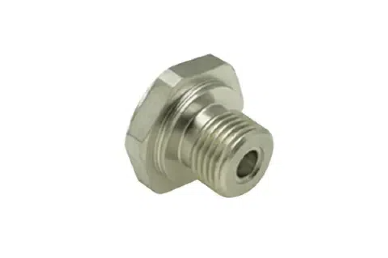
The semiconductor industry is another field where CNC processing hardware is indispensable. In this industry, copper semiconductor spare parts are vital, as copper is widely used for its excellent electrical conductivity. Semiconductor components require not only microscopic precision but also ultra-clean finishes that can withstand demanding environments inside fabrication equipment.
CNC machining enables manufacturers to create complex copper parts such as connectors, housings, and cooling components used in semiconductor production. The process ensures high precision in both dimensions and surface finish, minimizing electrical resistance and improving thermal performance.
Additionally, the scalability of CNC hardware supports the rapid innovation cycle of the semiconductor industry. As chip designs evolve and become more advanced, CNC systems can adapt quickly, producing new components with exact tolerances. This adaptability allows the semiconductor industry to keep pace with technological breakthroughs while maintaining consistency in quality.
The global push toward renewable energy has created growing demand for new energy fittings and fixtures, particularly in solar, wind, and battery technologies. These sectors rely heavily on specialized components to ensure efficiency and reliability. CNC processing hardware has become a key enabler in this area.
For example, in solar energy, CNC machines are used to produce precision mounts, frames, and connectors that hold photovoltaic panels in place. In wind turbines, CNC systems manufacture gears, shafts, and structural fixtures that must endure extreme stresses while maintaining smooth performance. For energy storage solutions like lithium-ion batteries, CNC machining provides custom housings, cooling plates, and connectors to improve safety and efficiency.
Because renewable energy technologies are evolving quickly, the ability of CNC hardware to produce custom parts and prototypes at short notice is particularly valuable. Manufacturers can test new designs, optimize them, and scale up production without long delays, ensuring the renewable energy sector continues to advance at a rapid pace.
One of the strengths of CNC processing hardware lies in its ability to handle a wide variety of materials. From hard metals like titanium and steel to softer materials like copper and aluminum, CNC machines can adapt to the requirements of different industries. This flexibility allows them to serve diverse applications such as aviation spare parts, semiconductor components, and new energy fixtures.
The adaptability extends beyond materials. Modern CNC machines can perform multiple operations—milling, drilling, grinding, and even 3D contouring—on a single platform. This integration reduces production times, lowers costs, and ensures that parts are made with fewer errors. It also makes CNC hardware a future-proof investment for manufacturers working across different sectors.
As industries continue to evolve, CNC processing hardware will play an even greater role in shaping their future. Advanced software integration, automation, and artificial intelligence are making CNC systems smarter, capable of predicting tool wear, adjusting parameters in real time, and reducing material waste.
In aviation, this means faster production of critical spare parts, improving maintenance efficiency. In semiconductors, it translates into even finer tolerances for next-generation copper components. In renewable energy, smarter CNC systems will accelerate the production of innovative fittings and fixtures designed for higher efficiency and sustainability.
The future of manufacturing is one where precision, scalability, and sustainability work together, and CNC processing hardware stands at the center of this transformation.
CNC processing hardware has redefined what is possible in modern manufacturing. By combining precision with scalability, it enables industries to produce reliable, consistent, and complex parts at the pace global markets demand. Its applications stretch across some of the most vital sectors today—aviation spare parts, copper semiconductor components, and new energy fittings and fixtures—making it a cornerstone of industrial progress.
Whether it is keeping planes in the sky, powering the next generation of electronics, or driving the renewable energy revolution, CNC processing hardware ensures that manufacturing keeps moving forward with unmatched accuracy and efficiency. As technology continues to advance, its role will only grow, shaping industries and enabling innovation on a global scale.


