
English 
T: +86-13760465505
E: vibetop@163.com
E: vibetop@163.com
No.13, Cheng Guang Industrial park, Dafu Community, GuanLan Street, Longhua District, Shenzhen, GuangDong, China

Views: 0 Author: Site Editor Publish Time: 2026-06-23 Origin: Site


Electric vehicle manufacturers focus heavily on advanced cell chemistry and complex battery management software. Yet, the physical reliability of the thermal management system ultimately dictates real-world safety and performance. If a single fluid connection fails, even the most sophisticated software cannot prevent a dangerous thermal event. Standard automotive or industrial hardware simply cannot withstand the unique environmental demands of high-voltage battery packs. These legacy components frequently struggle under extreme pressure drops, stringent dielectric fluid requirements, and the intense vibration profiles generated on the road. We must rethink how we secure these critical fluid pathways.
This article examines how purpose-built components secure modern thermal management loops. You will learn the specific evaluation criteria engineering teams must use to prevent catastrophic leaks and system failures. We will also explore how upgrading these seemingly minor parts optimizes vehicle servicing and significantly enhances overall powertrain reliability over the vehicle's lifespan.
System Integrity Relies on Micro-Components: A single failing connector can trigger thermal runaway or void a battery warranty; specialized fittings are required for high-voltage liquid cooling architectures.
Material Compatibility is Non-Negotiable: Evaluating liquid cooling connectors requires matching fitting materials to specific coolants (glycol-water mixtures vs. dielectric fluids) to prevent galvanic corrosion.
Servicing Drives Design: Integrating quick-disconnect (QD) fixtures drastically reduces aftermarket vehicle maintenance costs and safely isolates battery modules during repairs.
Validation Matters More Than Price: Shortlisting suppliers requires prioritizing rigorous validation frameworks (e.g., helium leak testing, IP6K9K ratings) over upfront component cost.
Transitioning from passive air cooling to active liquid cooling introduces complex fluid dynamics. High-pressure coolants flow directly adjacent to high-voltage electronics. This shift creates a massive engineering hurdle. Standard automotive hardware cannot bridge this gap safely. Internal combustion engines tolerate minor coolant seepage. Electric vehicle architectures demand absolute perfection. A single drop of conductive fluid on a busbar causes catastrophic failure.
Let us examine the primary failure points of standard hardware in modern cooling loops.
Inability to handle extreme thermal cycling. EVs undergo rapid environmental shifts constantly. They might fast-charge in sub-zero winter conditions. This spikes internal temperatures drastically within minutes. Standard plastics crack under these sudden thermal loads.
Susceptibility to micro-leaks. Sustained road vibration degrades basic seals over time. We call this Noise, Vibration, and Harshness (NVH). Continuous mechanical oscillation wears down traditional O-rings. It creates microscopic pathways for fluid to escape.
Excessive weight and spatial footprint. Standard industrial fittings carry too much mass. They also occupy too much physical space. Energy-dense battery pack designs require highly compact solutions. Every millimeter matters in a modern vehicle chassis.
Engineers require an entirely new class of engineered hardware. These parts must ensure zero-spill performance reliably. They must also maintain optimal fluid flow rates under immense physical stress. Relying on legacy catalogs often leads to hidden validation failures late in the development cycle.
Engineered hardware plays a highly active role in battery safety. New Energy Fittings and Fixtures maintain consistent coolant velocity across cold plates. They regulate fluid flow and mitigate pressure drops effectively. If a poorly designed fitting creates a bottleneck, it strains the system pump heavily. Purpose-built components eliminate these restrictive points entirely. They ensure laminar flow reaches every individual battery cell evenly.
These specialized fixtures also provide essential vibration isolation. Flexible routing fixtures absorb mechanical stress during transit. Robust mounting brackets hold lines firmly in place. This prevents road vibration from reaching rigid battery cell connections. If mechanical stress transfers directly to the cold plate, it fractures delicate micro-channels quickly.
Thermal expansion tolerance represents another critical operational factor. Battery modules expand and contract physically during high-power DC fast charging cycles. Cooling channels shift slightly as temperatures fluctuate violently. Specialized hardware accommodates this structural movement smoothly. They maintain secure seals without cracking or warping under pressure.
We recommend integrating floating structural brackets wherever possible. They allow hoses to flex naturally while maintaining a rigorous fluid boundary. You must design for dynamic movement rather than static installation.
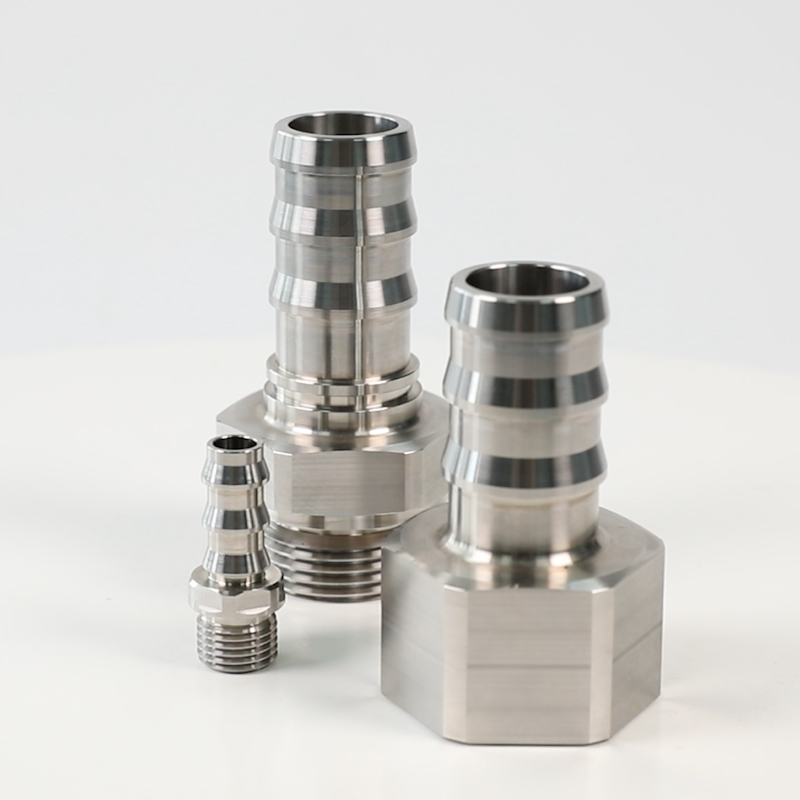
We must evaluate four distinct dimensions when selecting system components.
Material Compatibility and Weight: You must assess high-performance engineered plastics like PA66 and PPS. We often compare them against lightweight aluminum alloys. You need excellent resistance to chemical degradation. Different coolants demand vastly different material properties. Evaluating liquid cooling connectors means preventing galvanic corrosion inside multi-metal systems. Water-glycol mixtures react differently than specialized dielectric fluids.
Sealing Technology and Leak Prevention: We must move beyond standard single O-rings. Modern systems rely heavily on multi-seal redundant architectures. You have to assess long-term elastomer degradation accurately. Continuous EV operating temperatures break down basic rubber compounds quickly. Engineers strongly favor EPDM or advanced fluoropolymers for multi-decade longevity.
Spatial Efficiency (Packaging): Battery enclosures offer strictly confined spaces. You need low-profile, right-angle, and custom-geometry shapes. These specific designs fit snugly into tight packaging environments. Z-height restrictions often dictate the entire connector geometry. Bulky fittings simply cannot fit under modern floorboards.
Flow Characteristics: We must analyze the internal geometry of every fitting carefully. Smooth internal walls ensure minimal fluid turbulence. This maximizes cooling efficiency across the entire thermal management loop. Sharp internal corners create disruptive eddies and drop system pressure needlessly.
Material Decision Matrix for Cooling Connectors | |||
Material Type | Weight Impact | Corrosion Resistance | Primary EV Use Case |
|---|---|---|---|
PA66 (Nylon) | Very Low | High (Dielectric) | Low-stress fluid routing lines |
PPS Plastic | Low | Excellent | High-temperature manifold connections |
Aluminum Alloy | Moderate | Varies (Needs specialized coating) | High-pressure structural zones |
Hardware choices directly impact aftermarket service realities. The wrong fitting severely increases the labor hours required for battery diagnostics. It complicates routine coolant flushes and module replacements drastically. Technicians struggle to access deeply embedded hose clamps inside the battery pack.
We must integrate Quick-Disconnects (QDs) to solve these aftermarket challenges. QDs enable clean "dry-break" disconnections effortlessly. This prevents hazardous fluid spills during dealership servicing. It also protects technicians from dangerous high-voltage exposure. Dry-break technology isolates fluid instantly upon physical separation. Internal valving shuts off the flow before the external seal completely breaks.
Standardized, easily serviceable fixtures prevent destructive removal methods. Mechanics do not have to cut hoses or break factory seals. This dramatically lowers warranty claim frequencies globally. You ensure much faster turnaround times in the service bay. It makes routine maintenance significantly safer and much more predictable.
Using single-use crimp clamps in areas requiring frequent diagnostic access creates major headaches. This forces technicians to replace entire hose assemblies during basic sensor checks. You should prioritize reusable interlocking mechanisms in accessible service zones.
To minimize implementation risks, you must vet manufacturing partners meticulously. Upfront component validation matters far more than simple catalog availability. You need a partner capable of passing exhaustive quality checks.
Require hard evidence of environmental performance from your suppliers. Look for comprehensive burst pressure testing and thermal shock validation. Helium leak detection is absolutely mandatory for finding microscopic faults. Water submersion testing misses tiny gaseous escape routes completely. You should demand rigorous automotive-grade certifications. ISO/TS 16949 compliance indicates mature, reliable quality control systems. IP67 and IP6K9K ingress protection ratings remain equally essential. They guarantee resilience against high-pressure, high-temperature washdowns.
Assess whether a supplier can co-engineer custom solutions seamlessly. You might need unique shapes to match proprietary cold plate designs. Sometimes, standardized parts will suffice perfectly for secondary routing lines. You must determine this balance early in the design phase. Collaborating on custom geometries often yields vastly better spatial packaging.
Evaluate the manufacturer’s capacity to scale production safely. Their timelines must align perfectly with automotive PPAP (Production Part Approval Process) requirements. Consistent delivery schedules prevent massive assembly line delays. A supplier must demonstrate robust raw material sourcing capabilities to survive global disruptions.
Here are the core validation frameworks you must request from any supplier:
Helium mass spectrometry for sub-micron leak detection.
High-cycle thermal shock validation (shifting from -40°C to 85°C rapidly).
USCAR-compliant vibration and mechanical shock profiles.
Burst pressure testing exceeding standard operating limits by at least 300%.
EV battery cooling remains only as reliable as its weakest physical connection. Upgrading to specialized hardware is a strictly mandatory step for modern automakers. It actively mitigates severe thermal risks and ensures long-term vehicle reliability. Precision engineering at the micro-component level prevents macro-level system failures on the highway.
Engineering and procurement teams should audit their current thermal management BOM immediately. They must initiate rigorous tolerance testing without delay. Compatibility testing uncovers hidden structural vulnerabilities quickly. Engage closely with specialized connector manufacturers to refine your fluid architectures. Proactive hardware validation protects your brand reputation and safeguards drivers globally.
A: Standard hardware supports basic internal combustion engine coolants. EV environments require strict dielectric fluid compatibility. They demand much higher burst pressure thresholds to handle active pumping. Specialized components enforce zero-leak tolerances to protect sensitive electronics. They use advanced engineered plastics and coated alloys designed specifically for high-voltage isolation.
A: Precise flow maintenance prevents localized hotspots across the battery pack. If a hotspot forms, cells degrade rapidly and ignite. Zero-leak designs ensure conductive coolants do not escape their channels. Leaking fluid can easily short-circuit high-voltage battery cells. Reliable connections stop thermal events before they ever start.
A: Both materials serve distinct critical purposes. Plastics offer excellent weight reduction and vital electrical insulation. Metals provide superior mechanical strength for high-pressure distribution zones. The ideal choice depends entirely on the specific location within the cooling loop and the exact coolant chemistry used.
A: Components must pass rigorous automotive-grade validations. Essential benchmarks include IP6K9K for high-pressure water ingress protection. They must survive extreme burst pressure ratings and intense USCAR vibration testing. Thermal cycling longevity tests ensure elastomers do not degrade over decades of varying weather conditions.


