
English 
T: +86-13760465505
E: vibetop@163.com
E: vibetop@163.com
No.13, Cheng Guang Industrial park, Dafu Community, GuanLan Street, Longhua District, Shenzhen, GuangDong, China

Views: 0 Author: Site Editor Publish Time: 2026-07-03 Origin: Site


The automotive manufacturing landscape is undergoing a massive transformation. Rapid prototyping, widespread electric vehicle (EV) adoption, and localized supply chains define this new era. Traditional casting and injection molding often fail to meet aggressive lead times. They also struggle to achieve the strict tolerance demands required by modern engineering standards. Procurement and engineering teams face a serious dilemma. They must balance high performance and geometric complexity for specialized automotive components. At the same time, they need to maintain scalable production models.
Advanced CNC technology steps in to solve this exact problem. It is no longer just a convenient tool for rapid prototyping. It operates as a scalable, precision-driven solution for high-performance automotive manufacturing. Engineers rely on it to bridge the gap between initial design and final assembly. You can depend on this technology to drive your production forward while mitigating supply chain risks.
CNC machining guarantees ultra-tight tolerances (often up to ±0.001") critical for engine, fluid, and EV thermal management systems.
Direct machining from high-grade billet materials yields superior structural integrity compared to cast or 3D-printed alternatives.
Adopting on-demand CNC machining shortens automotive supply chains, reducing inventory holding costs and accelerating time-to-market.
Selecting a manufacturing partner requires strict evaluation of ISO 9001/IATF 16949 compliance, in-house CMM capabilities, and CAD/CAM digital integration.
Supply chains remain highly vulnerable to global disruptions. Bulk-inventory models often leave manufacturers holding excess stock or waiting on delayed shipments. On-demand manufacturing completely changes this dynamic. By utilizing CNC machining auto parts, OEMs and Tier-1 suppliers can successfully transition to agile, just-in-time (JIT) manufacturing. This approach reduces physical storage needs. It allows companies to pivot production schedules instantly based on real-time demand.
Accelerating time-to-market is another crucial advantage. Injection molding tooling requires weeks or even months to finalize. Engineers must wait for expensive steel molds before testing the first physical part. In stark contrast, CNC programming deploys rapidly. A machinist can load a CAD file, set up the machine, and cut a custom automotive component in mere hours. This speed allows for faster iterations. You can test multiple design variations within a single week.
The market is also adapting rapidly to EV and aftermarket demands. The industry shift leans heavily toward low-volume, high-complexity parts. EV battery enclosures, lightweight frames, and custom aftermarket upgrades require precise manufacturing. CNC offers the most viable economic model for these scenarios. It eliminates minimum order quantities. You only manufacture what you actually need right now. This flexibility supports the fast-paced innovation cycles seen in electric mobility.
Multi-axis CNC milling and turning achieve uncompromising dimensional accuracy. They effortlessly meet strict Geometric Dimensioning and Tolerancing (GD&T) requirements. This precision ensures perfect assembly fits across all vehicle components. When parts fit perfectly, you reduce warranty claims. You also prevent mechanical failures out on the road. Automotive systems operate under extreme stress, so dimensional accuracy remains non-negotiable.
Material versatility sets this manufacturing process apart. A massive performance gap exists between cast metals and machined billet metals. Castings remain prone to internal porosity. They can hide microscopic air pockets inside the material. These pockets compromise structural integrity under stress. Machining from solid billet metal prevents this issue entirely. The final part retains the continuous, dense grain structure of the raw material. It offers vastly superior strength and fatigue resistance.
Let us look at specific material applications driving modern automotive performance. We have organized a reference chart below to compare common materials utilized in this process.
Material | Primary Characteristics | Typical Automotive Applications |
|---|---|---|
Aluminum 6061 / 7075 | High strength-to-weight ratio, excellent machinability | Lightweight chassis parts, engine blocks |
Titanium (Grade 5) | Extreme heat resistance, superior strength | High-stress racing parts, custom exhaust systems |
PEEK (Engineering Plastic) | Electrical insulation, high chemical resistance | EV electrical housings, high-temperature sensors |
Surface finish also plays a critical role in part longevity. Precision surface finishes, measured in Ra values, directly impact fluid dynamics. Engine cylinder heads, transmission housings, and fluid management systems rely on incredibly smooth surfaces. Better finishes reduce friction and wear over the vehicle's lifespan. They ensure engine oil and coolant flow without turbulence. This optimization translates directly to better engine efficiency and lower operating temperatures.
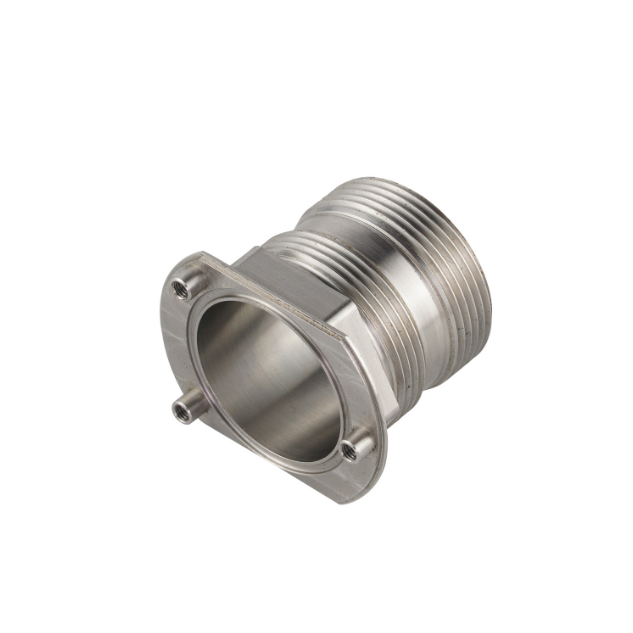
CNC technology delivers the highest return on investment in specific vehicle zones. Combustion and drivetrain components represent a massive category. Valve covers, cylinder heads, and custom gearboxes require exceptional durability. Thermal resistance and mechanical strength are critical here. Machining ensures these parts endure immense internal combustion pressures. The tight tolerances prevent oil leaks and maintain optimal compression ratios.
Electric Vehicle (EV) systems depend entirely on complex geometries. Heat sinks, battery housings, and lightweight structural brackets keep EVs running safely. These systems must maximize thermal management. At the same time, they must minimize overall vehicle weight to extend driving range. Multi-axis milling centers excel at carving out these intricate cooling channels. They achieve shapes impossible to replicate through traditional casting methods.
Suspension and steering parts also benefit greatly. Control arms and steering knuckles handle extreme abuse from rough roads. Custom Auto Parts used here must withstand extreme dynamic loads without failure. Machining them from high-grade solid aluminum or steel guarantees passenger safety. The precise geometry ensures accurate wheel alignment and predictable vehicle handling.
Finally, engineers rely on this process for functional prototypes. You need high-fidelity testing components during the R&D phase. These prototypes must match the exact material properties of your final production run. Machining provides an exact physical twin for crash testing. You can also use them for rigorous aerodynamic evaluations in wind tunnels.
Choosing the right manufacturing partner dictates project success. Quality assurance must take priority during your vendor selection. Advise buyers to require strict proof of industry certifications. Look specifically for IATF 16949 or ISO 9001 compliance. Emphasize that vague claims of precision mean very little. Vendors must back these claims up with documented, repeatable processes. Regular audits ensure they maintain these high standards over time.
Advanced inspection capabilities protect your engineering investment. Instruct buyers to look closely at a facility's metrology lab. Do they utilize Coordinate Measuring Machines (CMM)? Do they offer automated optical inspection for complex geometries? Full material traceability is equally vital in automotive engineering. Ask for original mill certs to verify exact metal grades. This prevents counterfeit or substandard metals from entering your supply chain.
Digital thread integration separates average shops from true manufacturing partners. The ideal vendor integrates CAD/CAM software seamlessly into their workflow. They will ensure design-for-manufacturability (DFM) feedback is provided early. You should receive this critical feedback before a single chip is cut. This proactive approach eliminates costly design revisions later.
You must assess capacity versus scalability. A capable job shop might build a beautiful prototype. Can they transition that successful prototype into a low-to-mid volume production run? Make sure their quality does not degrade as order volumes increase. Check their machine park redundancy. Ask how they handle sudden spikes in automotive production demands.
Engineers sometimes fall into the dangerous trap of over-tolerancing. Defaulting to extreme tolerances across an entire part creates unnecessary manufacturing problems. It exponentially increases cycle time and costs. We strongly recommend isolating tight tolerances strategically. Apply them only to critical mating surfaces or bearing fits. Leave non-functional areas at standard commercial tolerances. This simple adjustment saves substantial machining hours.
Material waste and machine time directly dictate part costs. High material removal rates consume expensive resources. You should adopt smart DFM practices immediately to counter this. Minimize deep pockets inside your designs. Standardize internal radii so machinists can reduce their tool changes. Every tool change adds seconds to the cycle time. These seconds add up rapidly during a production run.
Buyers need a clear shortlisting logic to select the best vendors. We provide a definitive three-step action plan below.
Submit a signed NDA along with your 3D CAD files and 2D drawings for comprehensive DFM analysis.
Request a formal First Article Inspection (FAI) report covering the initial prototype before approving larger batches.
Audit the vendor's scalable production capacity to mathematically verify their lead-time guarantees.
Following this logic ensures you partner with reliable experts. It removes the guesswork from automotive procurement. You secure high-quality components delivered strictly on schedule.
CNC machining provides the definitive path forward for modern engineering. It remains the best method for producing high-performance, structurally sound custom automotive components. The technology easily adapts to rapid industry changes. It supports everything from lightweighting initiatives to complex EV infrastructure. You gain unparalleled dimensional accuracy and material integrity.
The true value of this process lies not just in the machinery itself. It lies in partnering with a manufacturer that combines engineering expertise with stringent quality control. A strong partner catches design flaws early. They ensure consistent quality across every single batch. This collaboration drives your automotive innovation safely to the market.
Take the next logical step for your vehicle production line. Promptly submit your CAD files for a technical DFM review. Engage in a transparent quoting process to see how precision machining elevates your automotive projects.
A: Aluminum 6061 and 7075 are highly popular for lightweight chassis and engine components. Stainless Steel 304 and 316 offer excellent corrosion resistance for exhaust systems. Engineering plastics, like PEEK, provide essential electrical insulation and heat resistance for complex EV sensor housings.
A: CNC machining delivers far superior structural integrity. It cuts parts from solid metal billets, retaining maximum material strength. 3D printing is great for visual form and fit testing. However, machined parts safely handle end-use mechanical loads and high-stress dynamic environments.
A: You can expect standard commercial tolerances around ±0.005". For critical automotive applications, precision capabilities can reach down to ±0.001" or better. The final tolerance depends heavily on the specific machine utilized, the chosen material, and the part's overall geometric complexity.
A: You can reduce costs by applying actionable design-for-manufacturability (DFM) tips. Avoid deep cavities that require specialized tools. Use standard tool sizes for internal radii. Finally, relax non-critical tolerances on surfaces that do not mate with other components.


