
English 
T: +86-13760465505
E: vibetop@163.com
E: vibetop@163.com
No.13, Cheng Guang Industrial park, Dafu Community, GuanLan Street, Longhua District, Shenzhen, GuangDong, China

Views: 0 Author: Site Editor Publish Time: 2025-11-07 Origin: Site


Did you know that CNC machining is transforming the production of car auto parts? This innovative technology ensures that every part is made with precision and efficiency.
In the automotive industry, CNC machining plays a key role in producing complex components like engine parts and suspension systems.
In this article, we’ll explore how CNC machining enhances automotive manufacturing by offering unparalleled quality, cost-effectiveness, and sustainability.
CNC machining is a computer-controlled process that automates the movement of tools and machinery to cut, drill, and shape materials into the required form. By using a pre-programmed software, CNC machines ensure that each part is made with incredible precision. This technology is a game-changer for industries like automotive manufacturing, where accuracy and efficiency are paramount in producing car auto parts.
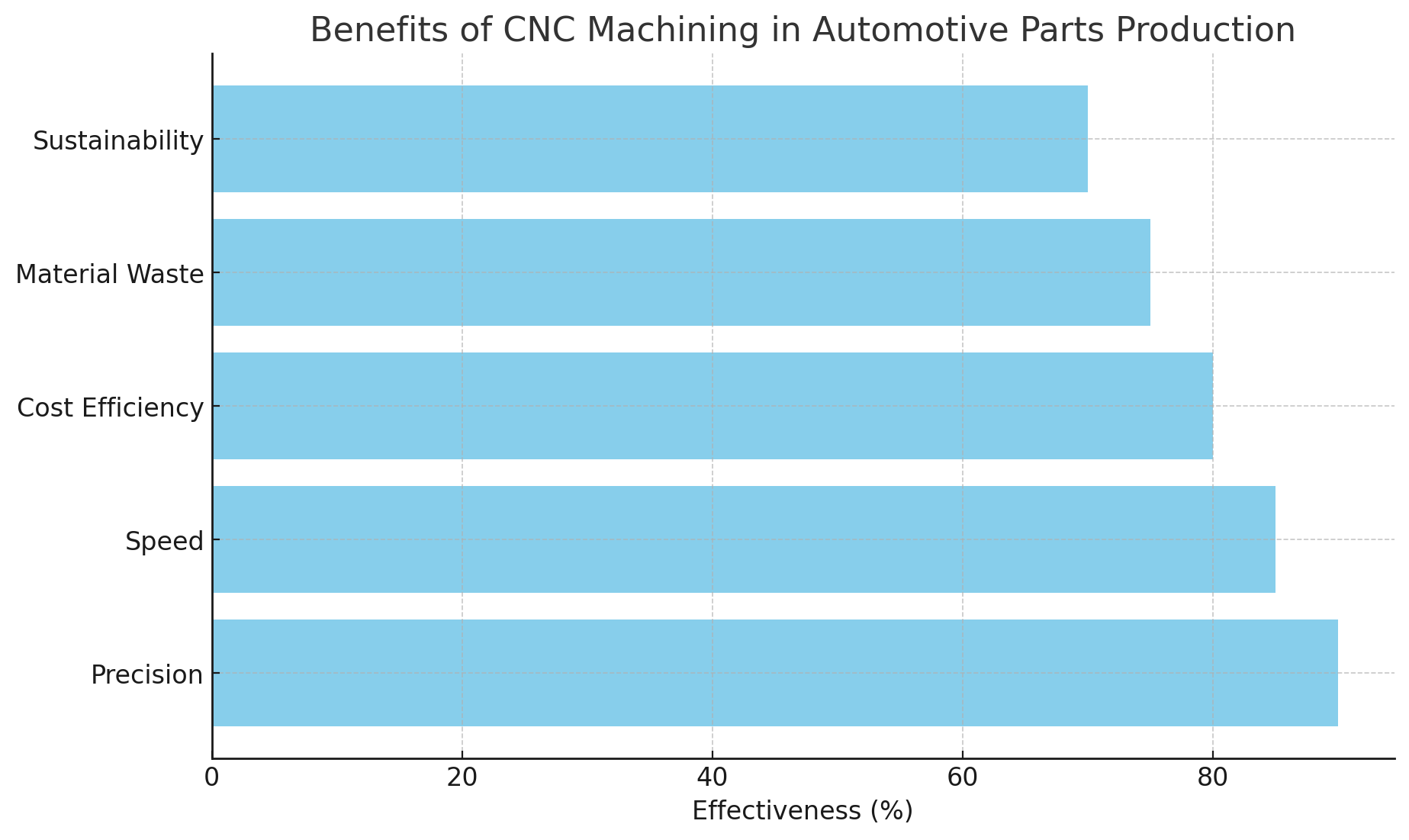
CNC machining brings numerous advantages to automotive parts manufacturing. It ensures high precision, which is essential for parts that need to fit together perfectly, such as engine components and transmission systems. Additionally, CNC machining reduces material waste and production time, allowing manufacturers to meet tight deadlines without sacrificing quality. These benefits are critical in the automotive sector, where performance and safety are non-negotiable.
CNC technology plays a pivotal role in the design and production of automotive parts. From complex engine blocks to intricate suspension systems, CNC machining enables manufacturers to produce parts with the tightest tolerances, ensuring that each component works seamlessly within the vehicle. It allows designers to create highly detailed and customized parts that were once impossible to produce with traditional methods.
CNC machining is known for its ability to produce parts with extreme precision. This level of accuracy is especially important in the automotive industry, where even the slightest deviation from the required specifications can lead to performance issues or safety concerns. For example, car auto parts like pistons and gears must be manufactured to within micrometers of the specified dimensions. CNC machining ensures that these parts meet the tightest tolerances, contributing to the overall quality of the vehicle.
One of the most significant advantages of CNC machining is its ability to maintain consistency in mass production. Once programmed, CNC machines can produce thousands of identical parts with the same level of precision and quality. This is crucial for automotive manufacturers who need to ensure that every component, from engine parts to brake systems, is consistently produced with the same high standards.
The precision of CNC machining directly influences the durability and performance of automotive parts. By ensuring that parts like camshafts, engine blocks, and drive axles are manufactured to exact specifications, CNC machining helps improve the longevity of vehicles. High-precision parts reduce wear and tear, ensuring that vehicles perform efficiently and reliably over time.
CNC machining is essential in producing high-performance engine parts such as cylinder heads, pistons, and valve guides. These components are critical for engine function, as they must withstand high pressures and temperatures. CNC technology ensures that each part is made to precise dimensions, improving engine performance and efficiency.
CNC machining plays a crucial role in manufacturing automotive brake calipers, rotors, and suspension components. These parts require high levels of precision to ensure the safety and comfort of the vehicle. CNC machines produce brake calipers that can withstand extreme heat and pressure, while suspension components are designed for optimal impact absorption and handling.
CNC machining is also used to produce essential transmission and drivetrain parts such as gearboxes, drive shafts, and differential housings. These components require intricate designs and tight tolerances to ensure smooth operation and efficient power transfer in the vehicle. CNC technology allows manufacturers to produce these parts with high accuracy, ensuring reliability and performance.
CNC machining accelerates the production of automotive parts by automating the process, reducing the need for manual labor. Once a CNC machine is set up and programmed, it can run continuously, producing parts at a rapid pace. This results in reduced lead times and increased output, which is crucial for meeting the demands of the fast-paced automotive industry.
Although the initial setup cost for CNC machines can be high, the long-term savings make it a cost-effective solution for automotive parts production. CNC machining reduces material waste, minimizes the need for rework, and cuts down on labor costs. These factors lead to significant cost savings, making CNC machining an attractive option for both small-scale and mass production runs.
CNC machining contributes to more sustainable manufacturing practices by reducing material waste and energy consumption. The precision of CNC machines ensures that only the necessary material is cut away, minimizing scrap and conserving resources. Additionally, CNC machining helps meet the increasing demand for eco-friendly automotive parts by producing components that contribute to fuel efficiency and lower emissions.
The combination of CNC machining and 3D printing is transforming automotive manufacturing. CNC machines excel at producing high-precision parts, while 3D printing allows for rapid prototyping and the creation of complex geometries. Together, these technologies enable automotive manufacturers to create parts that were once impossible to produce, enhancing both design flexibility and production efficiency.
Artificial intelligence (AI) and automation are playing an increasingly significant role in CNC machining. AI systems can optimize machining processes by predicting tool wear, adjusting cutting parameters, and identifying potential issues before they occur. This helps improve the efficiency, accuracy, and reliability of CNC machining in automotive manufacturing.
As the automotive industry shifts toward electric and autonomous vehicles, CNC machining will continue to play a critical role in producing parts for these advanced vehicles. CNC machines will be used to create lightweight components for electric vehicles, as well as complex systems for autonomous vehicles, such as sensors and control modules. The adaptability and precision of CNC machining make it essential for the next generation of vehicles.
One of the challenges of CNC machining in automotive parts production is managing the complexity of designs and the variety of materials used. Advanced materials such as composites and high-strength alloys require specialized tools and techniques to machine effectively. However, CNC technology allows manufacturers to overcome these challenges by providing the flexibility to work with a wide range of materials and complex geometries.
While the initial setup cost for CNC machining can be significant, there are ways to mitigate this expense. Manufacturers can reduce setup times and costs by optimizing machine configurations, using standard tooling, and investing in multi-functional CNC machines that can handle a variety of tasks. Additionally, batch production and automation can help spread the setup costs over large production runs.
Maintaining consistent quality is a critical aspect of automotive parts manufacturing. CNC machines are equipped with advanced monitoring and inspection systems that ensure parts meet the required specifications. Real-time feedback from quality control systems helps manufacturers identify and address any issues before they affect the production process, ensuring that every part meets the highest standards of quality.
CNC machining is a crucial technology in the automotive industry, ensuring precision, efficiency, and sustainability in manufacturing car auto parts. It plays a significant role in producing engine components and suspension systems, meeting strict specifications for optimal vehicle performance. As the technology advances, it will become even more essential in the production of parts for electric and autonomous vehicles. Companies like Shen Zhen Vibetop Technology offer reliable CNC machining solutions, helping manufacturers meet high-quality standards while driving innovation.
A: CNC machining is a process where computer-controlled tools create precise car auto parts, ensuring high accuracy and consistency in manufacturing.
A: CNC machining offers unmatched precision, reducing material waste and improving efficiency, which is crucial for manufacturing reliable car auto parts.
A: CNC machining ensures tight tolerances and high-quality finishes, making automotive parts like engine blocks and suspension systems more durable and efficient.
A: CNC machining provides faster production, lower labor costs, and reduced material waste, making it a cost-effective solution for manufacturing car auto parts.
A: CNC machining is used to produce a wide range of automotive parts, including engine components, brake systems, suspension parts, and drivetrain components.


