
English 
T: +86-13760465505
E: vibetop@163.com
E: vibetop@163.com
No.13, Cheng Guang Industrial park, Dafu Community, GuanLan Street, Longhua District, Shenzhen, GuangDong, China

Views: 0 Author: Site Editor Publish Time: 2025-10-27 Origin: Site


In today’s manufacturing world, the demand for precision and efficiency has never been higher. Modern industries rely on components that are not only complex in design but also expected to deliver outstanding durability, reliability, and performance under demanding conditions. Achieving this level of production is not possible through traditional manual machining or less advanced technologies. Instead, it requires the use of CNC processing hardware, a system that combines computer-driven accuracy with high-speed scalability.
CNC, short for Computer Numerical Control, refers to machines controlled by software that guides tools with microscopic accuracy. These machines can cut, drill, grind, and mill materials into highly detailed shapes with incredible consistency. The benefits are clear: reduced waste, improved productivity, and above all, parts that meet the exact specifications required by industries that cannot afford errors.
Among the many sectors that benefit from CNC processing hardware, three stand out for their reliance on both efficiency and accuracy: spare parts for aviation equipment, copper semiconductor spare parts, and new energy fittings and fixtures. Each of these industries faces unique challenges that CNC technology is perfectly designed to solve.
Manufacturing has always balanced two priorities: producing parts quickly and producing them correctly. In the past, manufacturers often had to sacrifice one for the other. Producing accurate parts could take a long time, while rushing production often led to inconsistencies. CNC processing hardware eliminates this compromise by delivering both efficiency and accuracy in the same process.
The efficiency comes from automation. Once a design is programmed into the CNC system, machines can operate continuously with minimal human intervention, producing hundreds or thousands of identical parts without error. Accuracy, on the other hand, comes from the precision of computer control. Unlike manual operations, CNC tools can follow design specifications down to microns, ensuring every part is identical to the digital blueprint.
This combination is especially critical in industries that rely on complex components. In aviation, even the smallest error can lead to safety risks. In semiconductors, a microscopic flaw can cause an entire system to fail. In renewable energy, a poorly fitted fixture can reduce efficiency and shorten the lifespan of the equipment. CNC processing hardware ensures that these challenges are met with dependable solutions.
The aviation industry is one of the most demanding when it comes to manufacturing standards. Aircraft components are exposed to extreme conditions: high pressure, varying temperatures, and constant vibrations. As a result, spare parts must meet strict certifications for durability and precision.
CNC processing hardware plays a crucial role in producing spare parts for aviation equipment. Whether it is a turbine blade, landing gear component, or structural bracket, the margin for error is extremely small. A single defect could compromise safety, which is why aviation manufacturers rely on CNC systems.
For example, consider turbine blades inside jet engines. These parts must withstand high temperatures and rotational speeds while maintaining aerodynamic efficiency. CNC machining allows these blades to be produced with precise angles and surface finishes, ensuring performance and safety. Similarly, cockpit instrument housings, hydraulic system fittings, and specialized repair parts for older aircraft models are all manufactured through CNC processes that guarantee consistency.
Efficiency is just as important as accuracy in aviation. Aircraft that are grounded for repairs cost airlines significant amounts of money. CNC processing hardware reduces downtime by producing spare parts quickly without compromising quality. This means that planes can return to service faster, saving time and resources while maintaining strict safety standards.
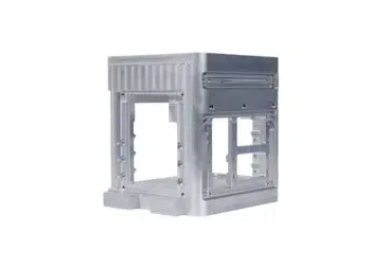
The semiconductor industry operates on a different scale but faces equally strict requirements. Semiconductor components are often microscopic in design, and even the slightest imperfection can disrupt performance. Copper is a widely used material in this industry because of its excellent electrical conductivity, and manufacturing copper semiconductor spare parts requires extreme precision.
CNC processing hardware makes this possible. By milling, cutting, and shaping copper with microscopic accuracy, CNC machines ensure that components such as connectors, housings, and thermal management systems meet the necessary specifications. In semiconductor production, the geometry of parts must be exact, and surface finishes must be flawless to prevent electrical losses or overheating.
For example, copper cooling plates used in semiconductor fabrication equipment require perfectly flat surfaces to ensure optimal heat dissipation. CNC systems can achieve this level of surface accuracy while maintaining production efficiency. Similarly, connectors and housings that protect delicate semiconductor structures must be machined with both precision and repeatability.
Efficiency is vital in the semiconductor industry because technology evolves quickly. New chip designs and architectures demand updated spare parts at a rapid pace. CNC processing hardware allows manufacturers to adapt by producing prototypes quickly and scaling up to mass production without delays. This combination of adaptability, speed, and precision keeps semiconductor manufacturing at the forefront of technological innovation.
As the world transitions toward renewable energy, industries such as solar, wind, and battery technology rely heavily on specialized components. These parts must not only function reliably but also be designed for long-term durability and efficiency. CNC processing hardware is central to creating new energy fittings and fixtures that meet these demands.
In solar energy, for instance, precision mounts and connectors are required to hold panels in place at the correct angle. CNC machining ensures that these mounts are produced with exact tolerances, guaranteeing maximum energy capture and long-term durability. In wind energy, large components such as gears, shafts, and fixtures for turbines must withstand high stress and environmental conditions. CNC hardware is capable of producing these parts with the strength and accuracy needed for consistent operation.
Battery technology also benefits from CNC machining. Custom housings, heat sinks, and connection plates used in energy storage systems require both electrical and mechanical precision. CNC processing provides the ability to design and produce these parts to exact specifications, supporting safer and more efficient energy storage solutions.
The renewable energy sector also values efficiency in manufacturing. As demand for sustainable technologies grows, suppliers must produce large quantities of components quickly. CNC processing hardware allows this scalability without sacrificing accuracy, ensuring that renewable energy continues to expand at a global level.
One of the greatest strengths of CNC processing hardware is its ability to handle diverse materials while maintaining efficiency and accuracy. Aviation spare parts often require titanium or aluminum alloys, semiconductor parts rely heavily on copper, and renewable energy fixtures use a mix of metals and composites. CNC machines can adapt to each material, cutting with the appropriate speed, force, and tooling to deliver reliable results.
This flexibility extends to production as well. CNC hardware can be programmed to switch from producing aviation components to semiconductor parts or renewable energy fixtures with minimal downtime. This adaptability not only saves time but also reduces production costs, making CNC machining a practical choice for industries that require both versatility and precision.
Looking ahead, CNC processing hardware is expected to become even more advanced. Integration with artificial intelligence and machine learning will enable machines to adjust automatically, predict tool wear, and minimize waste. This will further improve efficiency while maintaining accuracy across industries.
For aviation, this means faster production of certified spare parts with improved traceability. For semiconductors, it means keeping up with the shrinking scales of chip design. For renewable energy, it means producing more innovative fittings and fixtures that support global sustainability goals.
The ongoing evolution of CNC processing hardware ensures that it will remain an essential tool in creating complex components across multiple industries.
Efficiency and accuracy are no longer optional in modern manufacturing—they are requirements. CNC processing hardware delivers both, enabling industries to produce complex parts that meet exacting standards without sacrificing speed or scalability. Its role in spare parts for aviation equipment, copper semiconductor spare parts, and new energy fittings and fixtures demonstrates its versatility and importance.
From keeping aircraft safe in the sky to powering the next generation of electronics and driving renewable energy solutions, CNC processing hardware is at the core of industrial progress. As technology continues to evolve, its combination of precision and productivity will remain the foundation on which complex, high-performance components are built.


