
English 
T: +86-13760465505
E: vibetop@163.com
E: vibetop@163.com
No.13, Cheng Guang Industrial park, Dafu Community, GuanLan Street, Longhua District, Shenzhen, GuangDong, China

Views: 0 Author: Site Editor Publish Time: 2026-06-25 Origin: Site


Battery Energy Storage Systems (BESS) rely heavily on one critical junction to function properly. Electrical interconnectivity forms the true backbone of these massive energy setups. Without robust current pathways, even the most advanced battery cells struggle to deliver their full potential. Unfortunately, subpar connections frequently lead to severe thermal bottlenecks. They cause significant power loss and drastically elevate system failure risks during peak loads. You cannot afford weak links in high-density energy environments.
This guide introduces copper as the non-negotiable baseline for high-current BESS components. We transition you from simply recognizing these thermal and conductive problems to evaluating specific engineering solutions. You will discover architecture classifications, core evaluation dimensions, and strict compliance standards. By the end, you will understand exactly how precision components maximize energy storage efficiency.
Thermal management and pure conductivity make copper the industry standard for minimizing power degradation in energy storage.
Evaluating these fittings requires strict alignment with ampacity demands, mating cycle durability, and environmental IP ratings.
Integrating precision copper CNC parts ensures exact tolerances required for blind-mating and modular BESS architectures.
Compliance with global grid interconnection standards (UL/IEC) is mandatory to mitigate implementation risks and ensure facility safety.
Electrical conductivity directly dictates system efficiency. Copper ranks exceptionally high among non-precious metals for electron flow. High material purity minimizes electrical resistance across all physical joints. Low resistance translates directly to reduced operational energy loss. Engineers design these massive storage units for a 10 to 15-year lifecycle. Even a fraction of a percent in efficiency loss compounds significantly over a decade. Systems utilizing pure materials retain maximum capacity output. They push stored electricity to the grid without shedding valuable watts as waste heat. Integrating highly conductive Copper New Energy Fittings And Fixtures guarantees this baseline electrical performance.
Energy storage operations generate immense thermal loads. Copper possesses outstanding thermal dissipation properties. You must examine these properties against the primary BESS failure risk. Thermal runaway often triggers from localized heat at poorly mated connection points. Heat builds up rapidly when current forces its way through high-resistance junctions. Copper draws this dangerous thermal energy away from sensitive battery cell terminals. It acts as an effective heat sink while simultaneously carrying heavy electrical loads. Proper thermal mitigation keeps the entire rack within safe operating temperature ranges.
Long-term operational reliability outlasts initial component selection. Operators demand reduced maintenance intervals and fewer joint failures over time. Inferior metals degrade, oxidize, and warp under continuous thermal cycling. This degradation requires frequent physical inspections and premature component replacements. High-quality copper fixtures resist this mechanical fatigue. They maintain stable contact pressure year after year. Higher system uptime remains the ultimate goal for grid operators. Reliable interconnects ensure facilities stay online during lucrative peak shaving hours. You eliminate the cascading failures associated with degraded terminal lugs.
Different energy storage architectures impose unique physical and electrical constraints on their internal wiring. You must classify interconnects based on the specific application environment. We outline the three primary system categories below:
Residential Energy Storage Systems (RESS): Residential units face strict footprint constraints. Space remains highly limited inside home garages or exterior walls. You need highly compact connector designs. Manufacturers must integrate touch-proof safety mechanisms. These IP2X-rated designs prevent accidental shocks for untrained homeowners. Installation simplicity dominates this category. Decentralized units require plug-and-play fittings to accelerate deployment times.
Commercial & Industrial (C&I) Systems: Commercial facilities require modular scalability. These systems grow as power demands increase. They utilize standardized fixtures capable of handling frequent load-shifting operations. Businesses draw heavy power during peak tariff hours to offset grid usage. Connections must endure this constant, daily electrical stress without fatiguing.
Utility-Scale Interconnections: Grid-level installations demand massive current-carrying capacity. They handle megawatts of power seamlessly. Extreme environmental resilience becomes paramount for these outdoor containerized deployments. You will see rigid busbar integration here. Heavy-duty copper brackets provide structural stability against vibration and seismic activity.
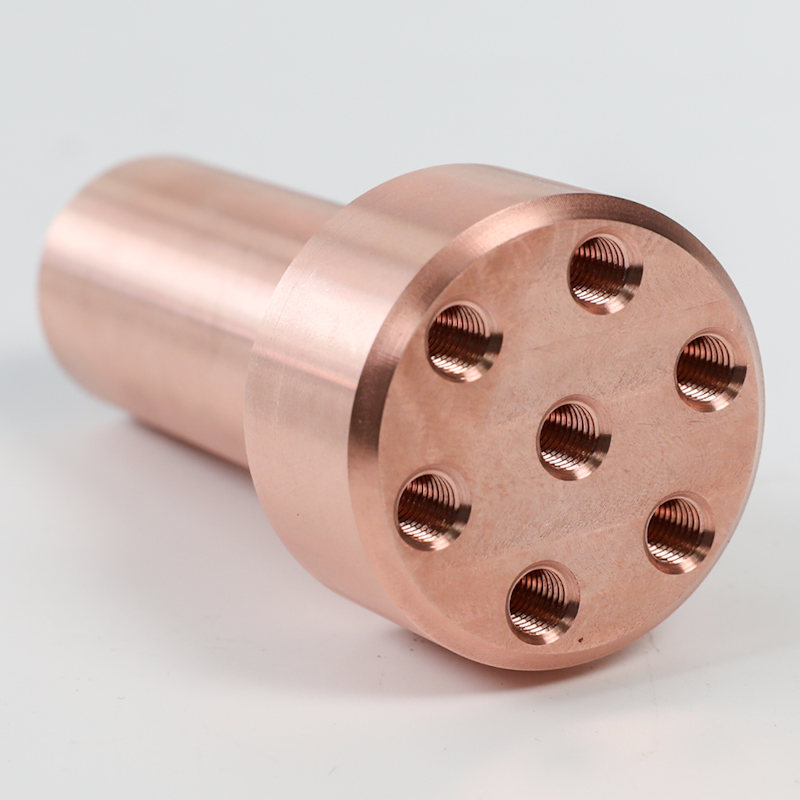
You must match continuous and peak current loads accurately to fixture specifications. The industry is rapidly shifting toward emerging 1500V+ high-voltage architectures. Higher voltage allows for lower current at the same power output. This dynamic reduces the necessary cable cross-section. However, these fixtures must still withstand intense continuous loads without melting. You evaluate ampacity by checking the maximum current a connector can handle before exceeding its thermal threshold. Peak loads during sudden grid surges test the absolute limits of these ratings.
Modern battery racks utilize swappable modules for rapid servicing. You must assess insertion and extraction force parameters. High insertion force ensures a secure connection but makes manual maintenance difficult. Low insertion force risks accidental disconnections during seismic vibrations. Connectors endure heavy physical wear. Structural integrity prevents mechanical failure after hundreds of mating cycles. Plugs and sockets must retain their exact shape.
Ingress protection defines environmental resilience. Harsh outdoor utility deployments expose equipment to relentless weather. IP67 and IP68 ratings signify deep protection against dust and water immersion. Moisture ingress causes immediate shorts and catastrophic failures. UV resistance protects exposed plastic housings from solar degradation. You must also verify operational temperature ranges. Extreme winter freezes and summer heatwaves stretch material expansion limits.
Table 1: Critical Ingress Protection (IP) Standards for BESS | |||
IP Rating | Solid Protection Level | Liquid Protection Level | Ideal BESS Application |
|---|---|---|---|
IP2X | Fingers / Objects >12.5mm | None required | Indoor Residential (Touch-proof) |
IP54 | Dust protected | Splashing water | Indoor C&I Cabinets |
IP67 | Dust tight | Immersion up to 1m (30 mins) | Outdoor Utility-Scale Connections |
IP68 | Dust tight | Continuous underwater immersion | Extreme Environment & Subterranean |
Evaluating the initial contact resistance at the factory is insufficient. Metals degrade naturally. You must focus on degradation curves under continuous thermal cycling. A connection might show negligible resistance on day one. After thousands of heating and cooling phases, micro-movements separate the contact surfaces. This fretting corrosion spikes resistance exponentially. Reliable fittings maintain a flat resistance curve over their entire operational lifespan.
Best Practice: Always request thermal cycling test data from manufacturers rather than relying solely on static factory resistance values.
Common Mistake: Ignoring vibration parameters. Even minor background vibrations in cooling fans can induce fretting corrosion if the mating force is too loose.
Modern rack-mounted battery modules rely heavily on blind-mate connections. Technicians push heavy battery packs directly into server-like racks. They cannot see the electrical pins aligning in the back. Poor manufacturing tolerances cause pins to misalign, bend, or snap entirely during insertion. High-precision copper CNC parts ensure exact fits every single time. They reduce installation time drastically by eliminating manual cable fastening. Precise machining guarantees that the female socket and male pin engage with uniform contact pressure across the entire surface area.
Raw copper oxidizes rapidly when exposed to atmospheric oxygen. This oxidation layer acts as an insulator. It spikes contact resistance immediately. Manufacturers utilize specialized plating to prevent this degradation. You must evaluate these plating materials based on application demands.
Chart 1: Plating Material Comparison | |||
Plating Material | Conductivity Impact | Durability / Mating Cycles | Oxidation Resistance |
|---|---|---|---|
Silver Plating | Elite (Highest conductivity) | Moderate (Softer metal) | High (Tarnishes, but sulfide remains conductive) |
Tin Plating | Standard | High (Resists physical wear well) | Excellent |
Nickel Plating | Lower | Very High (Often used as an undercoat) | Outstanding |
Silver plating offers superior electron flow and keeps contact resistance incredibly low. Tin plating provides a highly durable alternative for environments requiring fewer mating cycles. Nickel often acts as a barrier layer underneath silver to prevent copper migration.
Engineering teams face a constant decision between bespoke parts and standardized units. Proprietary battery pack designs often necessitate custom CNC machined terminals. Unique spacial constraints force engineers to route power at unconventional angles. Custom geometry ensures optimal space utilization within crowded chassis designs. Conversely, utilizing off-the-shelf standardized connectors accelerates prototyping. Standardized parts benefit from existing third-party certifications. You specify custom parts when standard models compromise thermal spacing or structural integrity.
Grid-compliant BESS deployments require mandatory adherence to international benchmarks. You must navigate a complex web of safety and performance standards. UL 4128 specifically addresses connectors for use in electrochemical battery system applications. It mandates rigorous fire resistance and structural tests. IEC 61984 dictates safety requirements for general connectors. Regulatory bodies halt facility commissioning if components lack these specific certifications. Verification minimizes implementation risks and legal liabilities.
Hybrid energy systems frequently interface copper fixtures with dissimilar metals. You will commonly find copper terminals bolting directly onto large aluminum busbars. This interface creates a serious electrochemical hazard. Galvanic corrosion occurs rapidly when moisture bridges these two specific metals. The less noble metal deteriorates, destroying the electrical joint. You must implement strict engineering considerations here. Utilize specialized bimetallic lugs or heavily plated washers. These separators break the galvanic circuit while maintaining excellent electrical conductivity.
You must design current systems with future retrofits in mind. Battery cell energy densities increase annually. Upgraded battery modules will push higher currents through existing rack infrastructure. You must anticipate these elevated thermal loads during the initial design phase. Furthermore, liquid-cooling integration is rapidly becoming the industry standard. Connectors must now share tight chassis space with coolant lines. Designing for future physical clearance and enhanced thermal durability ensures the system remains viable for decade-long deployments.
Compliance Checklist for Engineers:
Verify UL 4128 and IEC 61984 documentation directly from the manufacturer.
Confirm IP ratings match the worst-case environmental scenario of the deployment site.
Implement bimetallic isolation where copper meets aluminum components.
Over-index ampacity ratings by 20% to accommodate future module upgrades.
Selecting the correct electrical interconnects dictates the long-term success of any energy storage facility. You must prioritize high material purity to guarantee efficient energy transfer and prevent thermal runaway. Exact manufacturing tolerances ensure reliable blind-mating, while certified environmental testing validates outdoor resilience. Never underestimate the destructive potential of galvanic corrosion or mechanical fretting over a decade of operation.
Engineering and procurement teams should take immediate action to secure optimal components. Request comprehensive technical data sheets outlining thermal degradation curves. Verify all third-party testing reports regarding UL and IEC compliance. If standard parts fail to meet your architectural constraints, initiate a custom prototyping consultation to develop specialized CNC fixtures immediately.
A: Custom copper CNC parts provide vastly superior dimensional accuracy compared to cast alternatives. This precision proves essential for large-scale blind-mating operations. CNC machining also eliminates internal voids or porous defects found in cast metals. Solid, void-free copper maximizes electrical conductivity and eliminates hidden hot spots during high-current utility loads.
A: Silver plating significantly lowers contact resistance and prevents raw copper oxidation. Even when silver tarnishes, the resulting silver sulfide remains highly conductive. This ensures the connection does not degrade thermally over time, dramatically extending the safe operational lifespan of the battery system.
A: Acceptable contact resistance varies by specific voltage and current ratings, but it generally must remain below 0.5 milliohms for high-current applications. More importantly, this value must not spike beyond a marginal percentage after extensive thermal cycling and physical mating tests.
A: You must request the official certification documents directly from the component manufacturer. Furthermore, cross-reference the provided certification numbers via the official UL Product iQ database or the corresponding IEC online certificate portals to ensure the listings remain active and valid.


