
English 
T: +86-13760465505
E: vibetop@163.com
E: vibetop@163.com
No.13, Cheng Guang Industrial park, Dafu Community, GuanLan Street, Longhua District, Shenzhen, GuangDong, China

Views: 0 Author: Site Editor Publish Time: 2026-07-01 Origin: Site


For automotive engineers and procurement managers, transitioning from design validation to reliable part production requires mitigating supply chain and tolerance risks. You need components manufactured to exacting specifications without fail. When safety and vehicle performance intersect, cutting manufacturing corners guarantees failure. Casting or molding suits mass production perfectly well. However, precision CNC machining remains the absolute standard for tight-tolerance, high-stress automotive applications. It also dominates low-to-mid volume OEM production runs. Relying on advanced subtractive manufacturing ensures absolute structural integrity where mechanical failure is simply not an option. This guide provides a robust framework for evaluating CNC capabilities, material constraints, and supplier compliance. We explore what really matters when sourcing critical automotive components today. You will learn how to navigate common manufacturing pitfalls and select supply partners capable of delivering flawless results on schedule.
Precision CNC machining is optimal for complex geometries, critical engine components, and custom auto parts requiring tight tolerances (up to ±0.001mm).
Supplier evaluation must prioritize IATF 16949 certification and robust Quality Assurance (CMM inspection, material traceability).
Material selection (e.g., Aluminum 7075, Stainless Steel 316) and appropriate surface finishing directly impact component longevity in harsh automotive environments.
Scalability depends on early Design for Manufacturing (DFM) feedback to prevent cost overruns when moving from prototyping to low-volume OEM production.
Subtractive manufacturing solves specific engineering challenges other methods simply cannot address. You might initially consider casting or industrial 3D printing to save time. These alternative methods often fall short regarding structural density and material fatigue limits. CNC machining delivers superior functional properties immediately. It produces components directly from solid extruded or forged metal billets. The resulting parts exhibit uniform strength profiles essential for high-stress applications.
Time-to-market constraints heavily influence modern manufacturing choices. Designing custom auto parts requires rapid and frequent iteration cycles. CNC milling allows engineering teams to bypass prohibitive tooling delays. You skip the expensive mold-making phase entirely. Engineers can modify a CAD model on Monday and test a physical, end-use prototype by Thursday. This agility proves invaluable for aftermarket modifications and limited-run performance upgrades.
A successful procurement cycle relies on establishing clear, quantifiable success criteria. You must demand predictable lead times from your partners. Zero-defect tolerance adherence is mandatory for safety-critical systems. Suppliers must provide verifiable material test certificates to prove alloy authenticity. Establishing these rigid baselines early protects your assembly schedule and overall brand reputation.
Functional Testing Readiness: Machined prototypes mirror final production parts perfectly, allowing for accurate real-world stress testing.
Tooling Independence: No need to amortize expensive die-cast molds across small production batches.
Design Agility: Engineering changes require simple G-code updates rather than physical tool modifications.
Different vehicle systems face unique operational stresses. Subtractive manufacturing addresses these distinct mechanical demands beautifully. Selecting the right process for the right component prevents premature wear.
Powertrain and engine components endure extreme thermal fluctuations. They also face constant mechanical vibration and pressure. Cylinder heads, engine blocks, and valve retainers require absolute structural integrity. A microscopic surface defect here risks catastrophic engine failure. Precision milling ensures perfectly flat mating surfaces and flawless bore geometries. This maintains optimal compression ratios and prevents oil leaks.
Suspension and steering assemblies dictate vehicle safety and handling characteristics. Precision steering knuckles and control arms demand high fatigue strength. They absorb massive impact loads from uneven road surfaces daily. Machined aluminum or forged steel blanks provide the necessary physical resilience. You gain optimal suspension geometry control through tight dimensional accuracy.
High-performance tuning operations and specialized electric vehicle startups rely heavily on CNC capabilities. They constantly need specialized Car Auto Parts to differentiate their vehicles. Bespoke interior trims, custom motor brackets, and battery enclosures require both aesthetics and rigorous function. Low-volume electric vehicle manufacturers use these subtractive processes to stay agile during rapid platform development.
Fluid and exhaust management systems present incredibly complex internal geometry challenges. Valve housings and fluid distribution manifolds control critical system pressures. Flawless internal finishes prevent flow disruption and destructive turbulence. Advanced multi-axis machining reaches deep internal cavities effortlessly. This prevents fluid cavitation and ensures consistent cooling or lubrication across the powertrain.
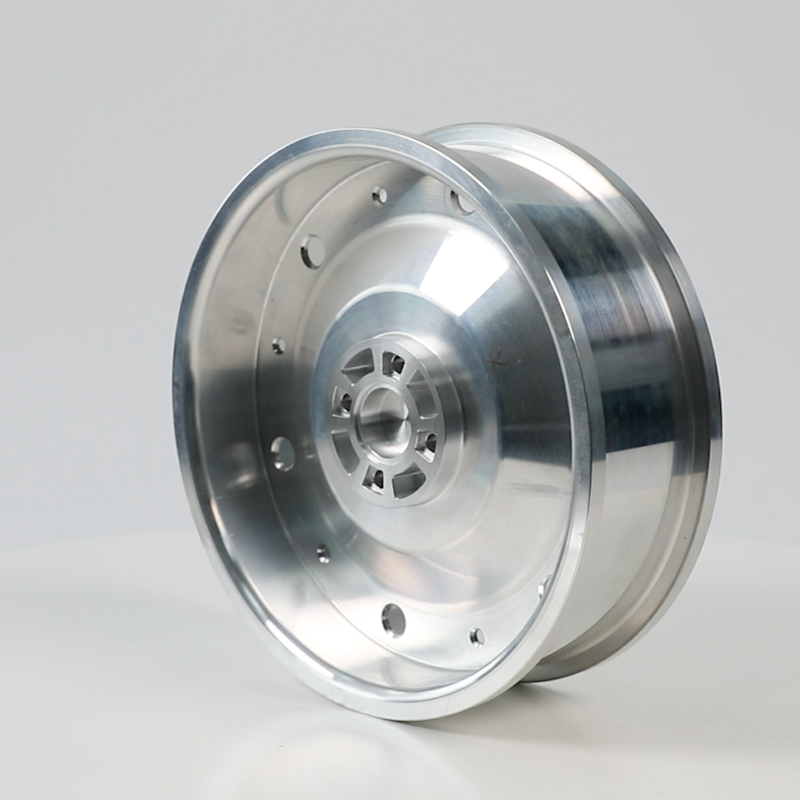
Selecting a manufacturing partner requires strict technical due diligence. An unqualified machine shop introduces unacceptable functional risks into your supply chain. You must look beyond simple hourly machining rates.
Industry compliance serves as your first filtering mechanism. Suppliers must hold active IATF 16949 and ISO 9001 certifications. IATF 16949 specifically guarantees automotive-grade quality management practices. It emphasizes continuous improvement and strict defect prevention protocols. A supplier lacking these formal systems cannot reliably support modern automotive programs.
Equipment capabilities dictate geometric possibilities and precision limits. Look for advanced 4-axis and 5-axis CNC milling centers on their equipment roster. These complex machines handle intricate automotive geometries efficiently. They drastically reduce the number of separate physical setups needed per part. Fewer physical setups minimize human handling errors and maintain tighter positional tolerances across multiple part faces.
Quality assurance rigor separates elite partners from average job shops. You must establish mandatory inspection requirements upfront. Demand detailed Coordinate Measuring Machine (CMM) reports for all critical dimensions. Require a comprehensive First Article Inspection (FAI) before approving full production runs. Insist on full raw material traceability using certified mill test certificates.
Evaluating scalability potential protects your future production growth. A shop might successfully deliver ten perfect suspension prototypes. Can they seamlessly transition those verified prototypes into a 5,000-unit batch? Investigate their internal automation capabilities. Check their spindle capacity and assess their secondary finishing networks. They must scale manufacturing volume without suffering any quality degradation.
Verify current IATF 16949 certification status and request recent audit histories.
Request a comprehensive equipment list detailing machine age, brand, and axis capabilities.
Review sample CMM reports to ensure they align with standard Geometric Dimensioning and Tolerancing (GD&T) practices.
Assess material inventory controls and evaluate their lot traceability procedures.
Specifying the right base alloy and surface treatment dictates overall component lifespan. Automotive environments expose parts to extreme heat, road salt, constant friction, and severe vibration. Material failure often stems from improper initial specification rather than poor machining.
Lightweighting metals dominate modern automotive engineering initiatives. Aluminum 6061 and 7075 offer exceptional strength-to-weight ratios. Engineers frequently specify these alloys for chassis mounts, suspension links, and transmission housing parts. They reduce overall vehicle mass while maintaining crucial structural rigidity. Reducing unsprung weight in suspension systems dramatically improves vehicle handling dynamics.
High-durability metals tackle the harshest operating zones within the chassis. Stainless steel and titanium excel in high-heat or highly corrosive environments. Exhaust manifolds, turbocharger components, and specialized fasteners rely on these robust materials. They resist thermal deformation and chemical degradation effectively over thousands of heat cycles.
Engineering plastics solve specialized challenges inside the cabin and engine bay. Advanced polymers like PEEK and POM (Delrin) provide excellent wear characteristics. They act as reliable thermal insulators and low-friction sensor housings. These plastics reduce weight and eliminate electrical conductivity issues near sensitive wiring harnesses.
Surface treatments elevate base material performance to meet demanding OEM specifications. Hard anodizing drastically improves wear resistance on exposed aluminum components. Passivation removes free iron from stainless steel surfaces, effectively preventing premature rust. Electroplating adds necessary corrosion protection and premium aesthetic appeal to visible exterior parts.
Material Selection Matrix for Automotive CNC Parts | |||
Material Category | Specific Alloy/Grade | Key Mechanical Characteristics | Primary Automotive Applications |
|---|---|---|---|
Lightweight Metals | Aluminum 7075-T6 | High yield strength, low density, high fatigue resistance | Control arms, structural chassis brackets, steering knuckles |
High-Durability Metals | Stainless Steel 316L | Excellent corrosion resistance, high tensile strength | Exhaust system components, fluid housings, fasteners |
Advanced Alloys | Titanium Grade 5 | Extreme heat tolerance, exceptional strength-to-weight ratio | Engine valves, high-performance tuning parts, exhaust headers |
Engineering Plastics | PEEK / POM | Thermal stability, electrical insulation, self-lubricating | Sensor housings, wire guides, interior trim clips |
Moving from initial design validation to steady production reveals hidden manufacturing risks. Proactive project management prevents costly delays and compromised technical specifications.
Design for Manufacturing (DFM) blind spots inflate costs unnecessarily. Engineers sometimes design overly complex aesthetic features. Deep, narrow cavities require specialized extended tooling that chatters and wears quickly. Non-standard internal radii force machinists to perform slow, careful finishing passes. These specific features exponentially increase total machining time. Early DFM collaboration identifies these critical blind spots. You can tweak designs slightly to speed up production dramatically without affecting function.
Cost scaling presents another harsh reality for procurement teams. CNC machining excels at absolute precision. However, unit economics do not drop aggressively at very high volumes. Die casting or metal stamping becomes far cheaper when producing hundreds of thousands of units. You must accurately analyze your projected volume trajectory. Determine the exact break-even point where transitioning away from pure CNC makes financial sense.
Lead time variables constantly threaten vehicle production schedules. Navigating raw material sourcing delays requires resilient supply chains. Complex secondary finishing often adds weeks to the delivery calendar. Heat treating, hard anodizing, and custom powder coatings usually involve third-party vendors. Rely on localized supply chains where possible. Always maintain safety buffer stock for critical Car Auto Parts to absorb unexpected vendor delays.
Implementation Risk Factors and Mitigation Strategies | ||
Risk Factor | Impact on Production Cycle | Proven Mitigation Strategy |
|---|---|---|
Complex Geometries | Increased machine cycle time and rapid tool wear | Apply early DFM reviews; standardize internal radii to match standard end mills. |
Volume Scaling | Plateauing per-unit cost reduction at high volumes | Identify break-even volume thresholds early; plan for hybrid manufacturing if needed. |
Secondary Processes | Extended and unpredictable external lead times | Use integrated supply partners offering in-house surface finishing and heat treatment. |
Precision CNC machining minimizes operational risk for high-stakes automotive parts. Success requires partnering with suppliers who consistently meet stringent quality and technical thresholds. Subtractive manufacturing provides the necessary structural integrity for components facing intense thermal and mechanical stress.
When evaluating potential manufacturing partners, avoid focusing solely on the lowest cost-per-part metric. This singular focus often hides poor quality control practices or severely outdated equipment. Instead, audit their compliance certifications meticulously. Verify their multi-axis machine capabilities and demand absolute inspection transparency. A reliable CNC partner acts as a direct extension of your internal engineering team.
To move forward effectively, initiate a highly detailed Request for Quote (RFQ). Always request initial DFM feedback alongside the official pricing. Provide comprehensive 3D CAD files, preferably utilizing STEP or IGES formats. Clearly detail your critical tolerance limits and exact surface finishing requirements in the technical drawing. Taking these structured steps ensures your procurement process yields high-performance, defect-free automotive components.
A: Standard CNC machining typically holds tolerances around ±0.125mm. However, advanced 5-axis machines can achieve ultra-tight tolerances down to ±0.001mm for critical engine and powertrain components. You should avoid over-tolerancing non-critical dimensions. Specifying maximum precision everywhere unnecessarily inflates manufacturing costs and extends lead times.
A: While technically feasible, pure CNC machining rarely scales cost-effectively for millions of units compared to die casting or stamping. It remains highly optimal for low-to-mid volume production runs, OEM replacement components, and custom aftermarket parts. Manufacturers often use it to finalize high-precision features on pre-cast mass-production blanks.
A: IATF 16949 is the global quality standard specifically designed for the automotive industry. It guarantees that a supplier uses automotive-grade quality management systems. This certification ensures a strict focus on continuous improvement, defect prevention, and reduction of variation in the supply chain, significantly lowering the risk of part failure.


