
English 
T: +86-13760465505
E: vibetop@163.com
E: vibetop@163.com
No.13, Cheng Guang Industrial park, Dafu Community, GuanLan Street, Longhua District, Shenzhen, GuangDong, China

Views: 0 Author: Site Editor Publish Time: 2026-07-02 Origin: Site


The automotive industry’s shift toward Electric Vehicles (EVs) and high-performance racing makes lightweighting a non-negotiable engineering mandate. This relentless pursuit of efficiency drives massive demand for custom aluminum components. Automotive engineers now prioritize advanced materials to meet aggressive performance metrics on the track and the road. Aluminum significantly reduces vehicle mass compared to traditional steel structures. However, sourcing custom parts introduces heavy complexities across the supply chain. You must navigate careful alloy selection, tight machining tolerances, and supplier reliability. A poorly chosen alloy or an unverified supplier can lead to catastrophic component failure during operation. Evaluating fabrication methods requires a rigorous look at material behavior and machining capabilities. You must thoroughly vet manufacturing partners for strict automotive compliance standards. This comprehensive guide details everything needed to master material selection, mitigate fabrication risks, and identify highly capable manufacturers.
Replacing steel with aluminum can yield up to a 50% weight reduction in specific automotive assemblies, directly impacting EV range and track performance.
The choice between 6000-series and 7000-series aluminum dictates the balance between cost-effective machinability and high-stress durability.
Precision aluminum CNC turning parts are essential for rotational and cylindrical components, requiring suppliers with stringent thermal control and CMM inspection capabilities.
Shortlisting manufacturers requires validating IATF 16949 compliance, secondary finishing expertise, and transparent prototype-to-volume scalability.
Reducing unsprung weight drastically improves vehicle dynamics. Lighter cars accelerate faster from a standstill. They brake shorter and corner much better. Every ounce removed from the suspension allows shocks to react quicker. This translates directly to superior handling on the track. Heavy suspension components create unwanted momentum during high-speed maneuvers. Aluminum mitigates this physical inertia effectively. You achieve crisp steering response instantly. Drivers feel more connected to the road surface. We see racing teams constantly swap steel control arms for custom aluminum variants. This simple material swap shaves critical seconds off competitive lap times. The structural integrity remains intact while dropping significant mass.
New Energy Vehicles rely on exceptionally heavy battery packs. This immense mass penalizes range and accelerates tire wear. Engineers use Aluminum Car Auto Parts to offset this battery weight aggressively. It acts as a critical variable in achieving strict range compliance. Removing structural mass directly increases the vehicle's total driving distance. You gain crucial payload capacity without requiring larger battery modules. Every kilogram saved translates directly to watt-hours preserved. We often see aluminum employed in battery housings, motor mounts, and structural subframes. These components maintain crash rigidity while dropping overall mass. They protect the delicate battery cells during impact. They also dissipate heat rapidly from high-voltage electrical systems. Improved thermal management extends the battery lifecycle significantly.
This alloy stands as the industry workhorse for automotive components. It is best for brackets, housings, and structural frames. High corrosion resistance characterizes its chemical makeup. It offers excellent weldability for complex vehicle assemblies. Machinists find it highly predictable during rigorous CNC machining. It balances raw strength and workability perfectly. You will often see it used in fluid reservoirs and mounting plates. The "T6" designation means it undergoes artificial aging and heat treatment. This thermal process maximizes its final yield strength. We recommend it for components exposed to harsh weather elements. It accepts anodic coatings beautifully for added protection.
Some applications require extreme durability under heavy loads. This alloy is best for high-stress racing components, suspension linkages, and gear shafts. It boasts a yield strength comparable to many hardened steels. However, it exhibits lower corrosion resistance than the 6000 series. It also shows a higher susceptibility to stress-corrosion cracking over time. Engineers must exercise careful application when specifying it for chassis parts. You cannot weld it easily without compromising structural integrity. We strongly advise applying protective surface treatments immediately. Hardcoat anodizing helps protect these high-strength parts from environmental degradation. It handles massive shear forces beautifully on the track.
Creating parts involves choosing between casting and billet machining. Cast aluminum suits high volume production runs perfectly. It excels at forming complex internal geometries like engine blocks. The molten metal flows into intricate mold cavities easily. Conversely, machining from solid billet works best for custom runs. Billet offers maximum structural integrity under stress. The solid grain structure resists extreme forces much better. You avoid the hidden porosity issues inherent in cast materials. We prefer billet for low-volume racing parts. It requires zero tooling costs for expensive molds. You can iterate designs rapidly between track testing days.
Alloy Grade | Primary Automotive Use | Yield Strength | Machinability | Corrosion Resistance |
|---|---|---|---|---|
6061-T6 | Brackets, Housings, Structural Frames | Medium-High | Excellent | High |
7075-T6 | Suspension Linkages, Gear Shafts | Very High | Good | Low-Medium |
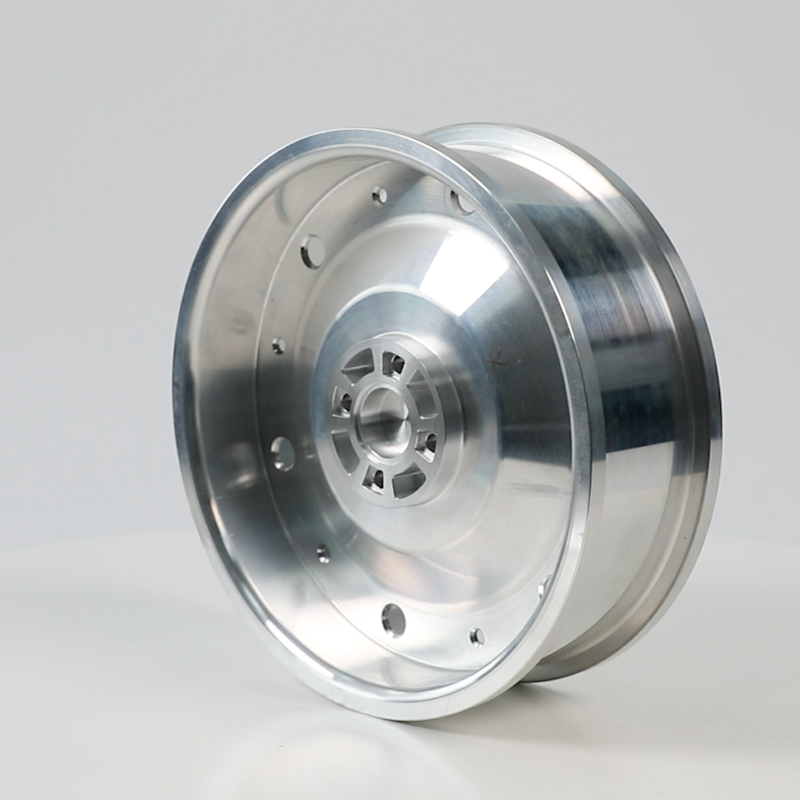
Drivetrains require absolute concentricity to function properly. Lathes spin the raw material at high speeds against stationary cutters. Engineers specify aluminum CNC turning parts for these critical rotational areas. They create high-tolerance cylindrical components effortlessly. Common applications include custom pistons, drive shafts, spacers, and bushings. Rotational stability relies on flawless turning processes. Even minor imbalances cause catastrophic vibrations at high RPMs. We rely on advanced turning centers to achieve perfect symmetry. Live tooling allows lathes to mill secondary features simultaneously. This reduces handling time and improves overall part concentricity.
Aluminum's inherent softness poses unique challenges during fabrication. The material behaves very differently than hardened steel alloys. You must use specific cutting tool geometries. Machinists prefer polished carbide inserts to prevent edge build-up. Material tends to stick to dull tools rapidly. It galls during high-speed turning operations. This ruins the surface integrity instantly. Machinists use steep rake angles to slice the metal cleanly. Generous coolant flow clears chips away immediately. Trapped chips will recut and scratch the delicate part surface. We prioritize optimal chip evacuation to maintain aesthetic quality.
Automotive standards demand absolute precision for moving parts. Engineers frequently frame the requirement for +/- 0.005mm tolerances. Reaching this requires extreme rigidity in the machine itself. Facilities must utilize advanced workholding setups. Improper clamping causes part distortion during the turning process. Collets must grip the material securely without crushing the thin walls. Operators monitor tool wear constantly during production runs. A slightly worn insert will push the part out of tolerance. We utilize continuous laser probing to verify dimensions mid-cycle. This automated verification prevents costly scrap rates.
Aggressive machining generates significant friction and heat. Aluminum expands rapidly under these extreme thermal conditions. Parts measured hot will fail QA when cooled. They shrink back to a smaller dimension naturally. Manufacturers need stringent flood coolant strategies. Temperature-controlled inspection rooms are strictly non-negotiable. Inspectors let parts normalize to ambient room temperature before testing. They only measure them after complete thermal stabilization. You cannot rush this stabilization phase without risking false readings. Precise climate control ensures coordinate measuring machines (CMM) record accurate data.
Designing custom parts requires a holistic view of the assembly. You must consider how mating components interact physically. Mixing materials introduces severe galvanic corrosion risks. Steel fasteners reacting against aluminum structural parts destroy assemblies over time. Moisture acts as an electrolyte in this scenario. It accelerates the corrosive chemical reaction aggressively. Engineers must calculate thermal expansion differences between mating metals. They apply isolative coatings to prevent direct metal-to-metal contact. Proper dielectric isolation guarantees longevity in harsh road environments.
Incorrect feed rates create major functional issues. They leave destructive chatter marks on the component. These chatter marks compromise O-ring seals quickly. High-pressure fluids leak past the damaged surface finish. They also disrupt aerodynamic efficiencies on exterior vehicle elements. Machinists must balance spindle speed and feed rate perfectly. They aim for specific Roughness Average (Ra) values. A perfectly smooth finish extends the lifespan of mating seals significantly. We employ specialized burnishing tools to achieve mirror-like finishes when required.
Measuring turned components before they reach ambient room temperature.
Ignoring anodic coating thickness in the final CAD dimensions.
Failing to isolate aluminum components from steel chassis mounts.
Using dull tooling that causes material galling and surface tears.
Selecting cast aluminum for high-shear racing linkages instead of billet.
Strict quality frameworks are mandatory for automotive sourcing. You must verify IATF 16949 or ISO 9001 certifications. These frameworks guarantee rigorous quality management systems. A supplier must demonstrate comprehensive First Article Inspection (FAI) reports. Full traceability ensures accountability across large production batches. They must track raw material origin reliably. You need material test reports (MTRs) for every alloy batch used. If a part fails, you must trace it back to the exact metal heat lot. This data transparency protects your engineering integrity.
Evaluate vendors based on their comprehensive finishing capabilities. Can they handle Type II and Type III (Hardcoat) anodizing in-house? In-house processing reduces production lead times drastically. It eliminates shipping delicate parts between secondary facilities. It also ensures coating thickness is correctly accounted for. Hardcoat anodizing changes the final part dimensions measurably. Machinists must cut the raw part slightly undersized. The anodizing layer builds up to reach the final tolerance. Splitting these precise steps across different vendors invites dimensional errors.
Assess the supplier's true capacity to scale efficiently. They must move seamlessly from low-volume 5-axis CNC prototyping to full scalable production. They should accomplish this without requiring complete re-tooling. Agility dictates your overall time to market. They should use standardized modular fixturing systems. This allows them to transfer programs to horizontal machining centers quickly. We look for partners who invest heavily in automation. Robotic loaders keep cycle times consistent during high-volume automotive runs.
Verified ISO 9001 or IATF 16949 active certification status.
In-house CMM (Coordinate Measuring Machine) testing capabilities.
Documented thermal management protocols for high-speed CNC turning.
Direct access to certified hardcoat anodizing baths.
Transparent Production Part Approval Process (PPAP) workflows.
Sourcing custom aluminum auto parts requires deep material understanding. It is rarely about finding the lowest cost per unit. It is about securing a reliable partner who understands specific thermal constraints. They must navigate tight machining requirements successfully. Selecting the wrong alloy compromises vehicle safety and performance metrics. Ignored thermal expansion ruins entire production batches.
Take proactive action by defining your GD&T specifications clearly. Finalize your 3D CAD files before beginning supplier outreach. Initiate RFQs with two or three vetted manufacturers immediately. Ensure they hold the proper automotive compliance certifications. Review their FAI process thoroughly to establish trust. Build a long-term engineering relationship based on transparent quality data.
A: Yes. Type III hardcoat anodizing can add up to 0.05mm (0.002 inches) to the surface. This must be accounted for in the pre-anodized machining tolerances.
A: Billet CNC turning offers superior grain structure and strength compared to casting, with zero tooling costs for molds, making it ideal for iterative, low-volume high-performance applications.
A: Use dielectric isolation methods such as specialized coatings, non-conductive washers, or anodizing the aluminum part to create a highly protective oxide barrier.


