
English 
T: +86-13760465505
E: vibetop@163.com
E: vibetop@163.com
No.13, Cheng Guang Industrial park, Dafu Community, GuanLan Street, Longhua District, Shenzhen, GuangDong, China

Views: 0 Author: Site Editor Publish Time: 2026-04-10 Origin: Site


In today’s modern manufacturing landscape, CNC machines (Computer Numerical Control machines) play a vital role in producing precision parts and components. Unlike traditional manual machines, CNC machines operate through computer programming, which allows for automation, accuracy, and efficiency. CNC machining has revolutionized industries ranging from aerospace to consumer goods by enabling the production of intricate, high-quality parts quickly and cost-effectively. This article explores the types of CNC machines, what they can produce, and how they contribute to manufacturing across various sectors.
At its core, CNC technology relies on a computer program to guide the movement of tools to fabricate materials such as metals, plastics, and wood. The process begins with a design (often created using CAD software) which is converted into a machine-readable code known as G-code. The G-code directs the CNC machine on how to cut, mill, or shape the material precisely. The key components of a CNC machine include:
Controller: This interprets the G-code and directs the machine's movements.
Tooling: The cutting tools that physically shape the material.
Workpiece: The material being processed.
Axis: CNC machines typically have three or more axes of motion (X, Y, and Z), enabling complex movements.
Feed Mechanism: Controls the speed and direction of the tool's movement relative to the workpiece.
By using computer-controlled commands, CNC machines are able to perform tasks with an incredible level of precision and repeatability.
CNC milling machines are among the most widely used types of CNC machines. They use rotating cutting tools to remove material from a workpiece. Milling machines are capable of performing operations such as drilling, cutting, and slotting. These machines can create highly detailed parts, including:
Flat surfaces
Gear teeth
Complex 3D shapes
Milling machines typically have multiple axes, allowing for more advanced operations. For example, 5-axis milling machines can cut along five different axes, enabling the creation of intricate parts for aerospace, automotive, and medical industries.
CNC lathes are used to create parts that require rotational symmetry. The workpiece is held in a rotating chuck, and the cutting tool moves along the axes to shape the material. Common products made using CNC lathes include:
Shafts
Bushings
Cylindrical parts
These machines are ideal for producing components that need high tolerance in round shapes, such as bearings or engine parts.
CNC plasma cutters utilize a plasma torch to cut through conductive materials, including steel, aluminum, and brass. The machine uses a computer-controlled system to precisely guide the plasma torch, ensuring clean and accurate cuts. CNC plasma cutters are ideal for:
Sheet metal fabrication
Automotive body parts
Large-scale metal structures
CNC laser cutters use high-powered lasers to cut through materials with extreme precision. Unlike plasma cutters, laser cutters can also handle materials like wood, plastic, and ceramics, in addition to metals. CNC laser cutters are frequently used to produce:
Intricate patterns for decorative items
Custom parts for electronics
Automotive components
Laser cutters are particularly well-suited for cutting thin materials with tight tolerances and complex geometries.
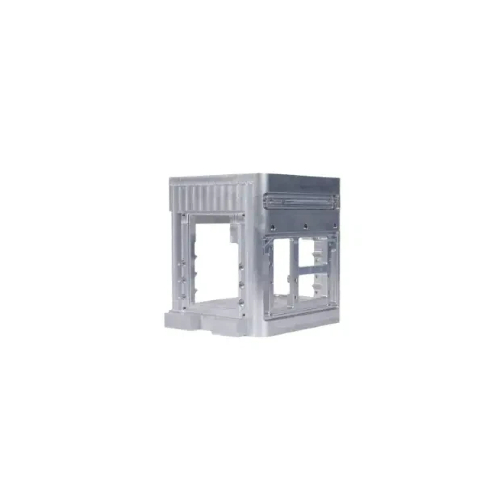
CNC machines are capable of creating a wide variety of products and components for multiple industries. The versatility and precision of CNC machining allow for everything from simple, everyday parts to highly specialized items.
One of the primary uses of CNC machining is for the creation of precision parts and components. Whether for the automotive, aerospace, or medical industries, CNC machines can manufacture parts with extremely tight tolerances. For example:
Industry | Common CNC Parts Created |
Automotive | Engine blocks, transmission parts, brake components |
Aerospace | Aircraft parts, turbine blades, engine components |
Medical | Surgical instruments, implants, medical devices |
Electronics | Circuit boards, enclosures, connectors |
CNC machines are widely used in prototyping, especially in the development of custom products. CNC prototyping allows designers and engineers to quickly create models of their concepts. This process enables rapid iterations, testing, and refinement before mass production begins.
For those in the furniture or interior design industries, CNC machines can create intricate and detailed furniture designs. CNC machines are particularly useful for cutting:
Custom wood furniture
Decorative inlays and carvings
Complex shapes for unique designs
By using advanced CNC technology, furniture makers can achieve precision in mass production or one-off bespoke designs.
The medical industry benefits greatly from the precision and cleanliness that CNC machining offers. CNC machines can create high-quality, sterile parts required for medical devices. These include:
Surgical tools
Prosthetics
Diagnostic equipment
One of the most significant advantages of CNC machines is their ability to produce parts with high precision. Since the machine is operated by a computer program, human error is minimized, and the parts are created with millimeter or even micron-level accuracy. This is especially important in industries where tolerances must be very tight, such as aerospace and medical device manufacturing.
CNC machines can operate 24/7, with little human intervention. This automation not only increases productivity but also ensures that each part is produced exactly as the previous one. As a result, companies can reduce labor costs and improve manufacturing efficiency.
CNC machines are incredibly flexible and can be programmed to make custom parts of virtually any shape or size. This flexibility allows for both mass production and small-batch manufacturing, which makes it easy to produce unique designs or test new prototypes.
The automotive industry relies heavily on CNC machining to produce high-quality, durable parts for vehicles. CNC machines are used to create components like engine parts, wheels, and chassis components. These machines can produce parts with the precision needed for performance and safety.
In the aerospace and defense sectors, CNC machining is essential for producing lightweight, durable parts that must meet stringent regulations. Components like turbine blades, structural parts, and landing gear are produced with CNC machines, offering the required level of precision for these highly critical applications.
CNC machining plays a vital role in the medical device industry, where parts must meet exacting standards for both functionality and sterility. Examples of medical parts created with CNC machines include surgical tools, orthopedic implants, and diagnostic equipment.
In the consumer goods industry, CNC machines are used to manufacture everything from electronics enclosures to high-quality tools. CNC machining ensures that these products meet high standards of performance and durability.
The future of CNC machining is bright, with several trends expected to shape the industry in the coming years. Key developments include:
AI and Machine Learning: Incorporating AI into CNC machines will enable them to learn and adapt, improving efficiency and reducing the need for manual intervention.
IoT Integration: Connecting CNC machines to the Internet of Things (IoT) allows for real-time data monitoring and predictive maintenance, reducing downtime and improving productivity.
Advanced Materials: As new materials, such as composites and advanced alloys, become more common, CNC machines will adapt to handle these materials with precision.
Additive manufacturing (3D printing) and CNC machining are expected to converge, allowing for even more complex and customized parts. CNC machines will increasingly be used alongside 3D printing technologies to create hybrid parts that combine the strengths of both techniques.
CNC machines are a cornerstone of modern manufacturing, offering unmatched precision, efficiency, and versatility. These machines have become indispensable in industries ranging from aerospace to consumer goods, enabling the production of complex, high-quality parts with incredible accuracy. As technology continues to evolve, CNC machines will only become more advanced, allowing manufacturers to create even more intricate, custom designs with greater ease.
At Vibetop, we understand the importance of CNC machining in delivering exceptional results. Our advanced CNC machines and skilled engineers ensure that we meet the most stringent requirements for industries like automotive, aerospace, medical, and consumer products. Whether you need precision parts or custom prototypes, we are here to help bring your designs to life.
If you're looking for high-quality CNC machining services or have specific manufacturing needs, feel free to contact us. Our team is ready to provide expert guidance and deliver tailored solutions that meet your unique requirements. Let us help you take your production to the next level.
1. What materials can CNC machines work with?
CNC machines can work with a variety of materials including metals (such as aluminum, steel, and titanium), plastics (like acrylic and PVC), wood, and composites.
2. What are the benefits of using CNC machines over manual machines?
CNC machines offer higher precision, faster production times, and the ability to produce complex shapes with minimal human intervention, reducing errors and waste.
3. Is CNC machining suitable for mass production?
Yes, CNC machines are ideal for both small-batch and mass production due to their ability to work continuously and with high consistency.
4. Can CNC machines create custom designs?
Yes, CNC machines are highly adaptable and can create custom designs, making them perfect for prototyping and bespoke manufacturing.
5. What industries use CNC machining?
CNC machining is used in many industries, including automotive, aerospace, medical devices, electronics, and consumer goods.


