
English 
T: +86-13760465505
E: vibetop@163.com
E: vibetop@163.com
No.13, Cheng Guang Industrial park, Dafu Community, GuanLan Street, Longhua District, Shenzhen, GuangDong, China


| Quantity: | |
|---|---|


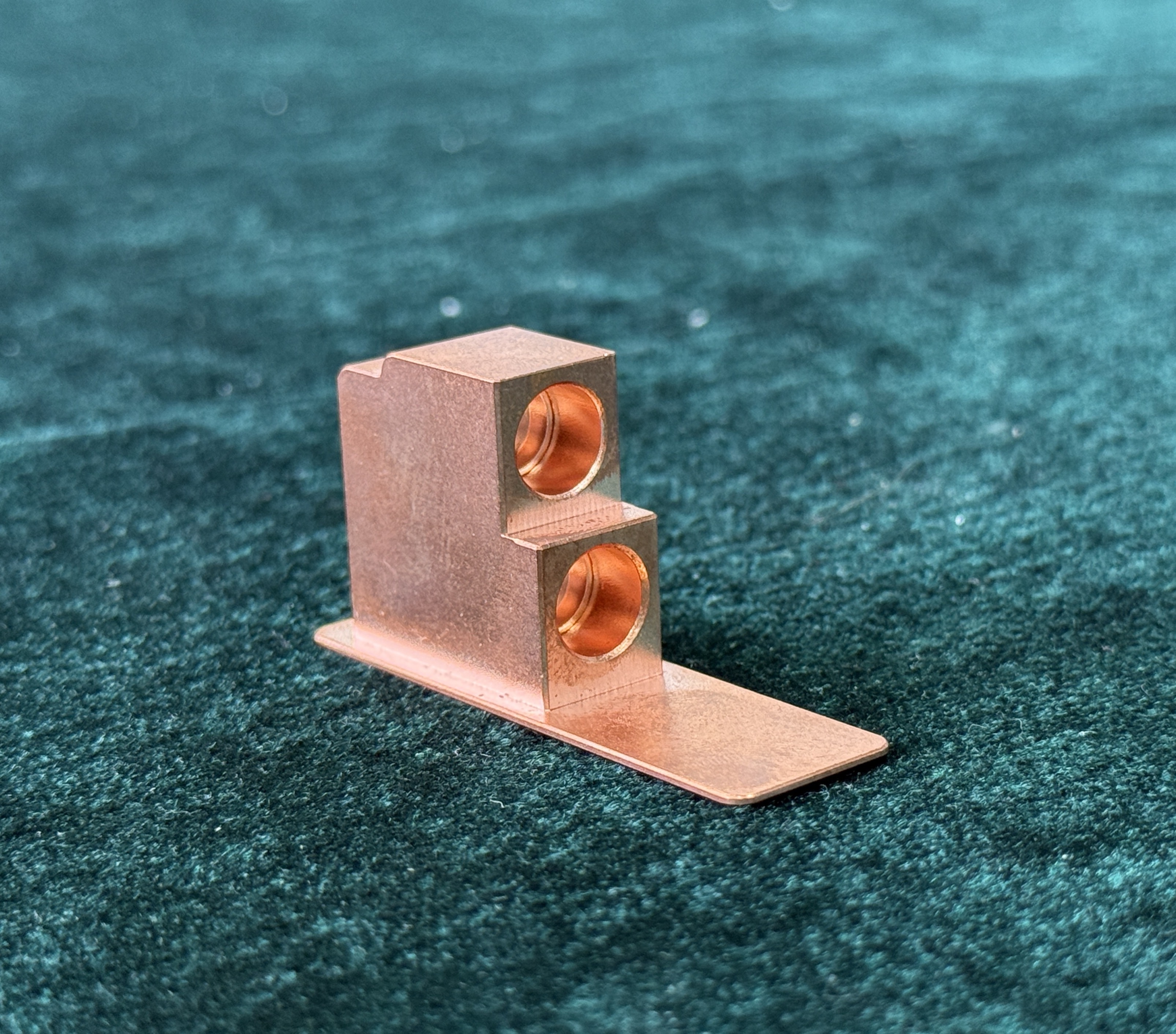
We specialize in made-to-order precision components for new energy equipment, industrial systems, and other application-specific projects. With over 18 years of machining experience, we provide customized manufacturing services based on customer drawings, material requirements, dimensional specifications, machining tolerances, and surface finishing needs.
As an experienced manufacturing partner in Shenzhen, China, we support customers from initial drawing evaluation and prototyping to batch production and quality inspection. Whether you need a small quantity for product development or larger production runs, we offer flexible order quantities with no minimum order quantity (No MOQ) and a focus on responsive communication and fast delivery.
Our goal is to help customers source components that meet their design requirements while maintaining practical production schedules and consistent dimensional accuracy.
Our Precision CNC Machining services support the production of custom fittings, fixtures, connectors, mounting components, and other precision-machined parts. Each project is evaluated according to its specific geometry, material properties, dimensional requirements, and intended application.
Depending on the component design and manufacturing requirements, the production process may include CNC machining, forging, welding, and other necessary operations. These processes are arranged according to the actual needs of each part rather than applying the same manufacturing route to every product.
We work from customer-supplied drawings and technical specifications to assess manufacturability and determine a suitable production approach. Before production begins, our engineers review key details such as material selection, critical dimensions, machining tolerances, and surface treatment requirements.
This drawing-based approach helps clarify technical expectations at an early stage and supports more efficient coordination throughout the custom manufacturing process.
For applications requiring fluid connections and thermal management, we can evaluate custom Copper Liquid Cooling Quick Disconnect components according to customer drawings and technical specifications.
These components may be used in liquid cooling assemblies where connection geometry, dimensional compatibility, material selection, and interface requirements are important. The appropriate manufacturing process depends on the component structure, copper material grade, required tolerances, and the specifications provided for the project.
For customized liquid cooling fittings and related parts, our engineers review the drawings before quoting to understand the required dimensions, machining operations, and surface finishing requirements.
Customers developing cooling assemblies can provide their existing drawings or project specifications for manufacturing evaluation. Specific performance requirements, including pressure resistance, sealing performance, flow characteristics, and material compatibility, should be defined and verified through the applicable engineering and testing procedures.
This part is we customized for our New Energy Fittings And Fixtures clients in the industry:
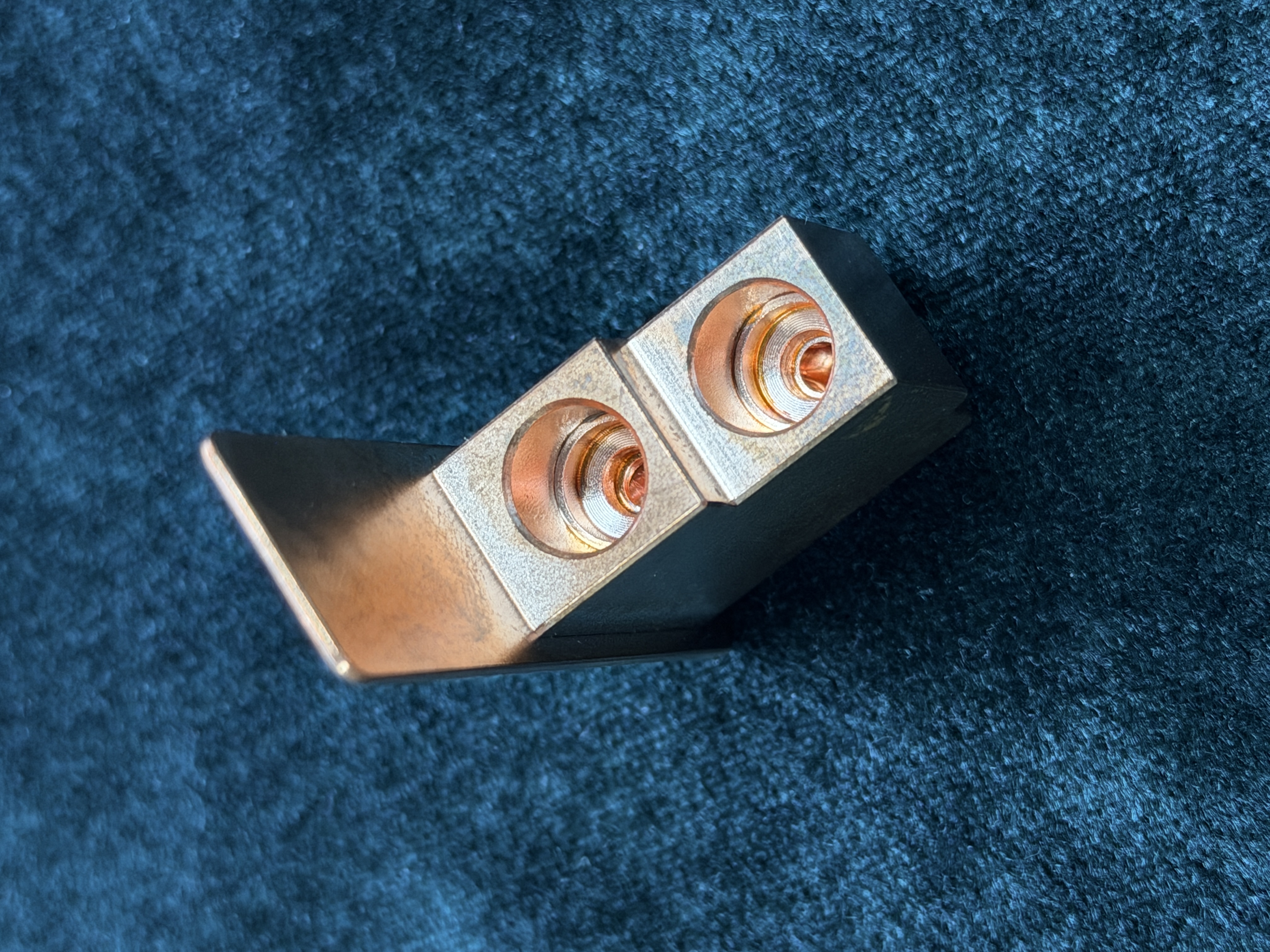
As demand grows for advanced thermal management in computing infrastructure, AI Data Center Liquid Cooling systems require components designed to suit their particular cooling architectures and assembly requirements.
We support custom manufacturing inquiries for precision fittings, connectors, mounting parts, and other machined components that may be incorporated into liquid cooling equipment and related assemblies. Production is based on customer drawings, with engineering review focused on material, dimensions, tolerances, manufacturing feasibility, and finishing requirements.
For projects involving cooling distribution assemblies or connection interfaces, accurate component dimensions are important for proper fit and assembly. Our inspection process includes visual examination with a magnifying glass and dimensional checks using measuring instruments.
Please provide your drawings and applicable technical specifications when requesting a quotation. Requirements involving leak testing, pressure testing, or other functional verification should be discussed separately to confirm the testing scope available for the project.
We follow a structured workflow to help customers move from an initial inquiry to approved samples and batch production.
Customers find our factory through online searches, product inquiries, or other sourcing channels and contact us with their project requirements. Please send your technical drawings and any available specifications, including material, dimensions, tolerances, surface treatment, and estimated order quantity.
Complete technical information helps us evaluate the project more efficiently.
Our engineers review the supplied drawings and assess the relevant manufacturing requirements, including:
Material type and specifications
Component dimensions and geometry
Required machining tolerances
Surface treatment or finishing
Necessary manufacturing processes
Estimated production complexity and lead time
Depending on the part design, the manufacturing route may include CNC machining, forging, welding, or other applicable processes. The appropriate route is determined individually for each component.
After the technical review, we prepare and send a quotation based on the confirmed project requirements. The quotation can cover applicable pricing, sample costs where relevant, estimated lead time, and other agreed commercial details.
If any drawing details require clarification, we communicate with the customer before finalizing the quotation.
If sample approval is required, we arrange prototype production according to the agreed specifications.
Our typical sample lead time is 7–15 working days, depending on part complexity, material availability, processing requirements, and the confirmation of technical details.
The sample stage allows customers to review the manufactured parts before proceeding with batch production.
After receive the samples, customers can check the dimensions, appearance, and other agreed requirements. Once the sample and the order details are confirmed, we will start mass production according to the agreed specifications.
Any changes to the approved design or requirements should be communicated before the production so that the necessary adjustments can be reviewed.
When production reaches approximately 30% completion, we conduct the first in-process quality inspection.
This inspection helps identify potential issues at an early stage and allows us to review relevant part dimensions and visible manufacturing conditions against the applicable requirements.
At approximately 70% production completion, we conduct a second inspection to review manufacturing progress and check relevant dimensional and visual requirements.
This intermediate check provides another opportunity to identify deviations and address potential issues before production is completed.
When the production is finish, we will arrange the final quality inspection of the finished parts.
Our inspection methods include visual examination with a magnifying glass and dimensional measurement using measuring instruments. The checks focus on the applicable drawing dimensions, specified tolerances, visible surface conditions, and other agreed inspection criteria.
These inspection stages are intended to help verify dimensional conformity, identify manufacturing issues, and reduce the risk of incorrect parts being delivered. Inspection results are assessed against the agreed technical specifications and applicable acceptance criteria.
By combining in-process checks with final inspection, we aim to provide customers with greater confidence in the dimensional accuracy and conformity of their customized components.
For custom precision components, dimensional accuracy is essential to ensure that parts can be assembled according to their intended design. Our inspection approach therefore emphasizes the verification of drawing dimensions and the identification of visible defects.
Visual examination and instrument-based dimensional measurement serve different purposes. Magnified visual inspection helps identify observable surface or manufacturing issues, while measuring instruments are used to check relevant dimensions against specified requirements.
The inspection items and measurement methods are selected according to the part drawing and project requirements. Where particular critical dimensions or tolerances are specified, these requirements should be clearly identified during the quotation and engineering review stages.
Our three-stage inspection arrangement—at approximately 30%, 70%, and 100% production completion—supports ongoing process monitoring and final verification. It is intended to help ensure that the delivered parts correspond to the confirmed specifications, rather than relying solely on an inspection performed after production.
We understand that prototype development, equipment assembly, and production planning often involve changing schedules and different order volumes.
Our factory offers flexible ordering with no MOQ, making our services suitable for sample orders, small-batch production, and larger customized orders. Production lead time are evaluated according to the actual project requirements, including component complexity, material sourcing, processing steps, and order quantity.
For urgent projects, we suggest customers to share their target delivery dates at the inquiry stage. So we can then assess the manufacturing requirements and discuss a practical schedule before the order is confirmed.
Our approach is to provide responsive communication and realistic delivery arrangements while maintaining the necessary manufacturing and inspection procedures.
If you are looking for a manufacturing partner for customized new energy fittings, precision fixtures, copper liquid cooling quick disconnect components, or other CNC-machined parts, we welcome your inquiry.
Share us your design drawings and technical requirements for an engineering review and quotation. Our team will evaluate the material, dimensions, machining tolerances, surface finishing, and applicable production processes before recommending a suitable manufacturing approach.
With over 18 years of machining experience, flexible order quantities, prototype support, and a structured inspection process, we aim to help customers turn technical drawings into customized components with clearly defined manufacturing requirements.
Contact us to discuss your project, get a quotation, or talk about the sample production.